The wrong grinder can gouge a slab, slow the crew, and spread hazardous silica dust. Matching the machine to the surface, finish, and job size protects production from the first pass.
Shop Concrete Grinders at Diamond Tool Store
A concrete grinder uses diamond tooling to remove coatings, flatten high spots, prepare slabs, or polish concrete. Handheld grinders control edges and tight areas; walk-behind and floor grinders keep larger slabs flatter and more productive. Choose by working width, slab hardness, finish, power, tooling, and dust control.
The key question is not simply which machine has more power, but which one fits the surface, access, finish, and daily workload. To choose well, first answer: What is a concrete grinder, and when do you need one? Here's how.
What is a concrete grinder, and when do you need one?
A concrete grinder is a surface preparation machine that cuts, smooths, or polishes the top layer of a concrete slab. Its diamond tooling can expose sound concrete, remove unwanted material, and create the finish needed for the next trade.
Contractors use grinders before applying epoxy, sealers, overlays, and other coatings. Grinding can also remove thinset, mastic, old coatings, and light surface flaws. It can flatten high spots or refine a floor through several polishing steps.
Jobs that call for grinding
A grinder makes sense when a coating needs a clean, even surface for a sound bond. It also helps when old adhesive or thinset would keep new flooring from sitting flat. For full-floor work, professional concrete floor grinders provide steady coverage across the slab.
High spots are another clear signal. A floor grinder is built to keep the surface flat, while a hand grinder gives the operator more freedom. That freedom helps near walls, posts, and corners, but poor control can leave gouges.
Grinding also fits into polished concrete work. The crew starts with a more aggressive tool, then moves through finer tools to refine the surface. The required finish and concrete hardness should guide each tooling choice.
Inspect the slab before choosing a process. Deep damage, thick material, or major height changes may need another removal method before grinding begins. Test a small area first to check tooling performance and the finish it leaves.
Handheld or walk-behind?
Use a handheld concrete grinder for edges, small repairs, tight areas, and detail work. Choose a walk-behind unit when the job covers a larger residential or commercial floor. Its wider path helps crews keep results even and limits operator strain.
Job size is only one buying signal. Pros should also check concrete hardness, desired finish, available power, working width, and dust collection needs. Large open floors may favor propane-powered concrete grinders because they do not need a tethered power source.
Also check site access, transport limits, tooling supply, and the crew's ability to maintain the machine. A productive grinder is one the crew can move, power, control, and support throughout the job.
Dust control from the start
Concrete grinding can release respirable crystalline silica dust, which can cause lasting lung damage when inhaled. OSHA lists two main controls for floor grinders: an integrated water system or a vacuum dust collection system. Its floor grinder safety guidance also calls for correct equipment care and worker training.
Plan dust control before selecting the machine and tooling. A vacuum setup needs a manufacturer-recommended shroud, enough suction at the grinding point, and an efficient filter. Wet grinding needs slurry cleanup, since dried slurry can release silica dust back into the air.
Walk-behind vs. handheld vs. floor concrete grinders
The right concrete grinder depends on the area, access, removal rate, finish, and power available at the site. Handheld tools handle edges and tight spots. Compact walk-behind grinders suit many small and mid-size floors, while larger floor systems support steady production across open areas.
Start by separating reach from output. A tool that reaches a wall edge may be too slow for the main slab. A high-production machine can cover open concrete fast, but it may not pass through narrow doors or work close to columns.
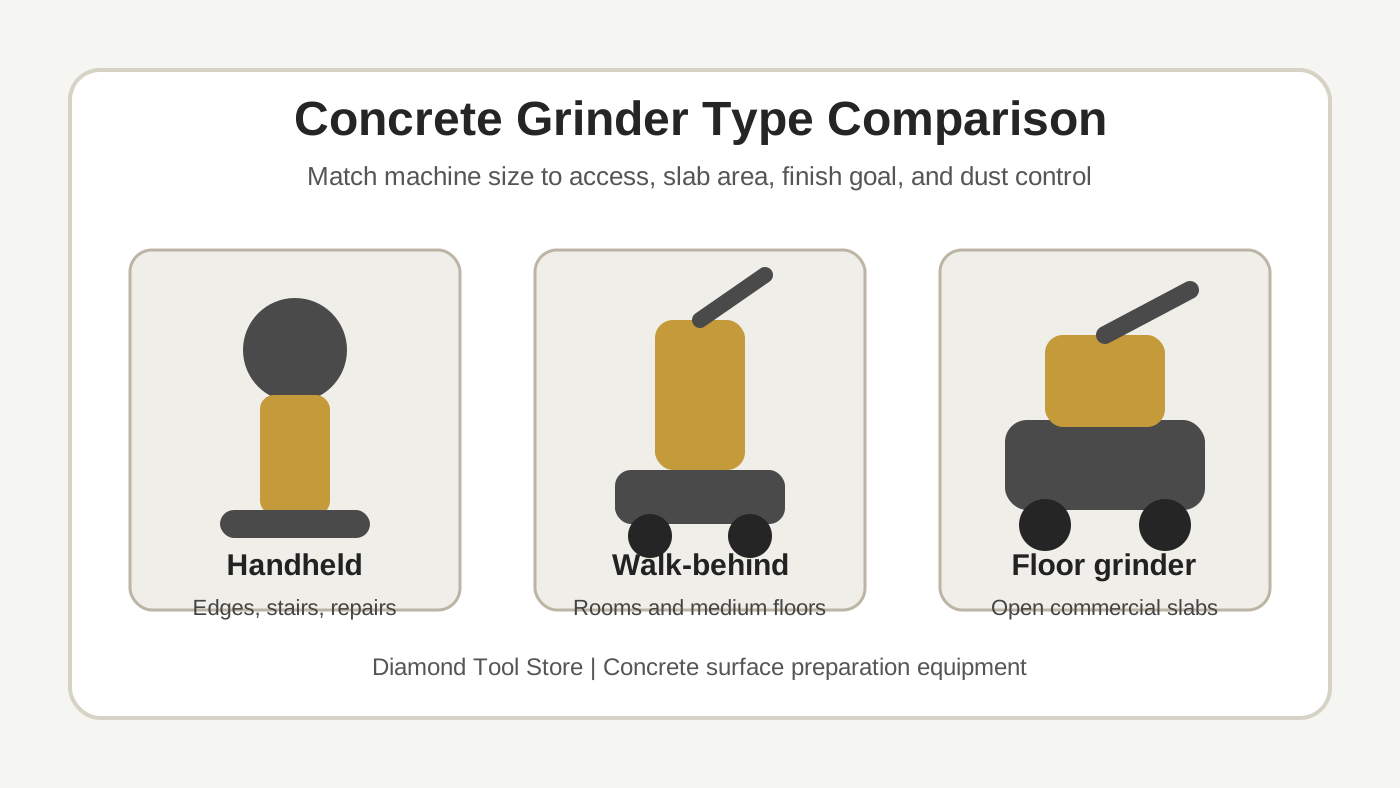
Concrete grinder type comparison
This table compares the three main choices by field use. Exact capacity depends on the machine, diamond tooling, slab hardness, and coating. Contractors should confirm working width, power input, tooling fit, and dust-control connections before ordering equipment.
- Handheld grinder: Best for edges, corners, stairs, spot repairs, and detail work. It offers precise local control, but it is slow across broad areas and easier to gouge when the operator rushes.
- Compact walk-behind grinder: Best for small to mid-size rooms and general surface prep. It balances coverage, control, and transport, but it will not match the output of a larger floor system.
- High-production floor grinder: Best for large, open commercial or industrial floors. It covers concrete quickly and creates a consistent profile, but it needs more planning for access, power, dust collection, and transport.
| Factor | Handheld | Walk-behind | Floor grinder |
|---|---|---|---|
| Best use | Edges | Rooms | Open floors |
| Power | Small electric | Electric | Electric or propane |
| Buyer fit | Repair crews | General contractors | Flooring crews |
Use the table above as a quick first pass. Then confirm tooling, power, dust control, and access before choosing a machine.
Many jobs need two machine types rather than one. A walk-behind or floor grinder handles the main field, then a handheld unit finishes the perimeter. This setup helps crews keep a flat, even profile without slowing the main machine for every edge.
Power, tooling, and dust control
Power should be checked before choosing machine size. Electric grinders need a compatible site supply and cord plan. Propane units remove the power-cord limit in open areas, but crews must follow the maker's rules for safe use.
Tooling must match both the machine and the work. Segment bond, grit, and head setup affect how the grinder cuts and leaves the surface. Dust control is also part of the equipment choice, not an add-on after work starts.
Concrete grinding can release respirable crystalline silica. OSHA lists water delivery and vacuum dust collection as control methods for walk-behind milling machines and floor grinders. Vacuum systems must use a maker-recommended shroud, enough suction at the cutting point, and a suitable filter.
Matching the machine to the buyer
A contractor doing patch repairs may get more value from a handheld grinder and a matched vacuum. Crews preparing full rooms should compare compact professional concrete floor grinders by working width, transport needs, and available power.
High-output flooring crews should focus on uptime, consistent results, and tooling changes across different slabs. Large walk-behind floor grinders make sense when repeat work can support their size. Access limits, loading needs, and the crew's edge-work plan still matter before purchase.
How to choose the right concrete grinder for your job
Project scope and finish goals
The right concrete grinder matches the floor, the finish goal, and the work area. Start by defining what the machine must remove or create. Then check site limits, operator needs, and dust control before comparing models.
A small edge repair calls for a different setup than a large warehouse floor. The following process helps narrow the options without buying more machine than the job needs.
- Measure the work area and note access limits. Record the slab size, door widths, stairs, columns, and tight corners. A handheld unit suits small areas and edge work, while a walk-behind machine covers open floors with a flatter, steadier pass.
- Define the main task. Heavy coating removal needs an aggressive setup that can maintain steady contact with the slab. Surface prep may call for a more controlled cut, while polishing needs a machine that supports several grit stages and a consistent finish.
- Inspect the slab and coating. Note concrete hardness, high spots, cracks, coating type, and coating thickness. These details guide the choice of diamond tooling, machine weight, and head speed. Test a small area when the slab or old coating is not well documented.
- Set the required production rate. Estimate how much floor must be finished during each shift. Wider, heavier machines can raise output on open slabs, but they may slow work near walls. Compare suitable professional concrete floor grinders by working width, weight, and tooling options.
- Plan for edges and detail work. A large floor grinder will not reach every wall, corner, drain, or column base. Include a compatible hand grinder or edge grinder in the plan. The edge setup should create a finish that blends with the main field.
- Confirm power, mobility, and dust control. Check the available power source, cord routes, ventilation, and vacuum capacity. Propane can reduce cord limits on large open floors, while electric machines may suit indoor sites with suitable power. Match every grinder to an approved dust-control method.
Machine fit and operator workload
Production speed is not only about working width. A machine that is hard to turn, transport, or keep balanced can waste time. Consider how often the operator must load tooling, empty the dust collector, move cords, or work around fixed objects.
Walk-behind machines help maintain a flat path across larger floors and can reduce strain during long passes. Handheld grinders give the operator more control at edges, but they demand skill to avoid gouges. For broad, open slabs, compare walk-behind floor grinders against the site's access and handling limits.
Dust-control requirements
Dust control is a core selection factor, not an add-on. Grinding concrete can release respirable crystalline silica, which can cause lasting lung damage. OSHA lists integrated water delivery and vacuum dust collection as control methods for walk-behind floor grinders in its floor grinding safety guidance.
Choose a grinder with a shroud and dust port that fit the planned vacuum system. For wet grinding, plan for water supply, electrical safety, and slurry cleanup. Confirm that hoses, filters, and connectors can withstand the full job before work starts.
Diamond tooling matters as much as the grinder
A concrete grinder supplies the motion, weight, and power needed to work the slab. The diamond tooling decides how that power reaches the concrete. Good tooling cuts at a steady rate, leaves the right profile, and helps prevent wasted passes.
Start by identifying the concrete hardness, any coating, and the finish needed after grinding. Then match the segment, bond, and grit to that task. A large machine with the wrong diamonds may cut slowly, glaze over, or leave a surface that needs extra repair.
Segments, bonds, and machine compatibility
Diamond segments contain the cutting particles held inside a metal bond. The bond controls how fast fresh diamond becomes exposed as the segment wears. A softer bond tends to suit hard concrete because it sheds more readily. A harder bond tends to last better on soft, abrasive concrete.
Segment shape also changes how a tool contacts the slab and clears ground material. Aggressive shapes can help with fast stock removal, while wider contact areas can leave a more even scratch pattern. Choose the pattern for the job rather than assuming one segment handles every surface.
Before buying tooling, check the grinder's plate style, attachment system, rotation direction, and supported tool size. The tooling must seat firmly and clear the machine housing. Reviewing professional concrete floor grinders can help you compare machine layouts before selecting compatible diamonds.
Match your concrete grinder with professional diamond tooling
Grit progression and specialty removal tools
Use coarse grits when the job calls for fast removal or a deep surface profile. Move through finer grits when the goal is a smoother floor or polished finish. Skipping too far between grits can leave deep scratches that later passes cannot remove. Stop at the grit that creates the profile required by the next coating or finish.
- Coarse metal-bond diamonds remove material and flatten uneven areas.
- Medium grits refine the scratch pattern left by the first cut.
- Fine grits prepare the floor for a smoother finish or later polishing stages.
- PCD tools strip many thick or stubborn surface coatings before normal grinding begins.
Cup wheels suit handheld edge work, small repairs, and areas a floor grinder cannot reach. They help blend edges with the main field of the slab. PCD tools use sharp cutters to lift coatings instead of slowly grinding through them. They can be too aggressive when the goal is light profiling or careful removal near sound concrete.
Coating removal may expose concrete that cuts differently from the first test area. Test a small section, inspect the scratch pattern, and adjust the tooling before covering the whole floor. Grinding concrete can also release hazardous silica dust, as explained in OSHA's floor grinder guidance. Keep tooling, shrouds, and dust controls compatible with the chosen setup.
Reading tool wear during the job
Heat, dust output, cutting speed, and segment wear show whether the tooling matches the slab. Glazing often means the bond is not exposing fresh diamond fast enough. Rapid wear may point to a bond that is too soft for the concrete. If the cut slows, stop and inspect instead of adding pressure without a clear reason.
Track which bond, grit, and segment style works in each test area. Inspect every tool before installation, then check wear at planned breaks. Use the same tooling across the active grinding head unless the machine maker specifies another setup. Balanced, compatible tools help the grinder leave a more consistent profile across the floor.
Power, dust control, and jobsite constraints to check
A concrete grinder must fit the site as well as the floor. Before choosing a machine, confirm the available power, work area, access path, ventilation, and cleanup plan. These checks prevent delays caused by the wrong plug, a narrow doorway, or a vacuum that cannot keep up.
Power source and working area
For an electric grinder, verify whether the site provides 115V or 230V service. Then check the plug type, circuit capacity, cord length, and distance to the panel. Do not assume a standard wall outlet can run every machine.
Propane removes the need for a power cord and can suit large, open floors. Still, indoor use calls for careful review of ventilation and site rules. Compare electric models with propane-powered concrete grinders only after confirming what the facility allows.
Working width also affects jobsite fit. A wider grinder covers open floor faster, while a narrow unit moves more easily through tight rooms. Check whether the machine can reach edges, pass through doors, and work around fixed equipment.
Dust collection and silica awareness
Grinding concrete can release respirable crystalline silica dust, which can harm the lungs. OSHA describes integrated water delivery and vacuum dust collection as two main control methods for walk-behind grinders. Review its floor grinder dust-control guidance when planning the work.
For dry grinding, match the grinder shroud and vacuum connection before the machine arrives. Confirm hose size, suction needs, filter setup, and a safe method for emptying collected dust. Inspect hoses for cracks and loose fittings before each shift.
Wet grinding controls dust at the surface, but it creates slurry that needs prompt cleanup. Water also changes the electrical safety plan. Use suitable ground-fault protection and watertight connections where required, and plan how the crew will contain and remove slurry.
Transport, weight, and crew needs
Machine weight matters before grinding starts. Review loading limits, ramps, stairs, elevators, floor protection, and the route from the vehicle. A heavy grinder may need a liftgate, trailer, or more than one worker for safe placement.
- Measure doorways, turns, and elevator openings along the access route.
- Confirm the crew can move the grinder, vacuum, tooling, cords, and water gear.
- Choose a working width that balances floor coverage with access and edge work.
- Plan indoor ventilation, outdoor weather protection, noise limits, and debris disposal.
Large open floors often favor high-output walk-behind machines. Small rooms and divided spaces may reward a lighter, narrower setup. Review professional concrete floor grinders by power source, working width, and weight before matching one to the crew and site.
Should you buy, rent, or step up to a larger grinder?
Buy a concrete grinder when repeat jobs justify ownership, training, tooling, maintenance, and storage. Rent for one-off work, uncommon finishes, or a trial before purchase. Step up to a larger walk-behind or floor grinder when labor, flatness, and production speed matter more than compact handling.
Choose between buying, renting, and stepping up by looking at production needs, repeat use, tooling, labor, and support. The lowest daily machine cost does not always produce the lowest job cost.
A concrete grinder should match the floor area, concrete hardness, finish goal, and available power. It should also fit the operator's skill and the crew's dust control plan.
When buying makes sense
Buying often fits contractors with repeat grinding, coating removal, or polishing work. Regular access lets the crew learn one machine, maintain it, and keep the right tooling ready. Ownership also avoids rental pickup, return, and availability limits that can slow a tight schedule.
Review the full operating setup before buying. Compare compatible diamond tooling, dust extractors, power needs, transport, service access, spare parts, and operator training. Browse professional concrete floor grinders by working size and configuration, not by purchase price alone.
- Buy when the machine will support frequent, planned work.
- Confirm that local service and replacement tooling are easy to obtain.
- Budget for wear parts, filters, hoses, and routine checks.
When renting is the practical choice
Renting can suit a one-time job, an uncommon finish, or a short trial before purchase. It also gives a crew access to a larger machine without adding long-term storage and service duties.
Rental choices may limit head styles, diamond bonds, working widths, power options, and available dates. Ask what tooling is included, what wear fees apply, and whether the supplier offers setup training. Confirm that the grinder, vacuum, and tooling work as one system before the rental clock starts.
Dust control cannot be an afterthought on a rental. OSHA says floor grinders on concrete can create respirable crystalline silica dust that can cause irreversible lung damage. Its floor-grinder dust control guidance covers water delivery and vacuum dust collection systems.
When to step up in machine size
A handheld grinder works well for edges, tight areas, repairs, and small sections. On broad floors, it is usually a supporting tool rather than the main production machine. Handheld work also demands more operator skill to avoid low spots and uneven passes.
Step up to a walk-behind unit when floor size, repeat passes, or finish consistency starts driving labor too high. A larger working path can improve production, while the machine's design helps the crew hold a flatter floor. High-output jobs may also justify propane-powered concrete grinders where cord-free movement fits the site.
Do not size up on width alone. Check doorway access, loading limits, floor conditions, power or fuel rules, dust collection capacity, and operator training. The right step-up machine should increase output without creating a new handling, service, or safety problem.
Frequently Asked Questions
Can I use a regular grinder for concrete?
A regular angle grinder can grind concrete only when it has a concrete-rated diamond cup wheel, a compatible shroud, and effective dust collection. Standard setups may expose workers to dangerous silica dust. For handheld concrete grinding, OSHA calls for either an outdoor water-delivery system or a manufacturer-recommended shroud connected to vacuum dust collection.
Which concrete grinder is best for small projects?
For small repairs, edges, stairs, and tight spaces, a handheld concrete grinder is usually the practical choice. A compact walk-behind grinder suits small open floors when a flat, consistent finish matters. Match the machine to the surface area, access limits, concrete hardness, required finish, and available power. Confirm that compatible diamond tooling and dust controls are available before work begins.
How do you choose the right concrete grinding diamond tool?
Choose a concrete grinding diamond tool by matching its bond, grit, and attachment system to the slab and the desired result. Hard concrete generally needs a softer bond, while soft or abrasive concrete generally needs a harder bond. Start with coarse tooling for coating removal or leveling, then move through finer grits for polishing. Verify that every segment, shoe, or cup wheel fits the grinder.
What power requirements are needed for industrial concrete grinders?
Concrete grinder power needs depend on motor size and production goals. Small electric units often use standard jobsite power, while larger industrial machines may require higher-voltage or three-phase service. Propane models remove the power-cord limit but must meet the manufacturer's operating requirements. Before buying, compare the machine's voltage, amperage, phase, plug type, generator requirements, and the power available at typical jobsites.
Are walk-behind concrete grinders necessary for residential jobs?
No. A handheld grinder may be enough for a small patch, edge, stair, or other tight area. A walk-behind machine becomes useful on larger residential floors because its weight and working width improve coverage and help maintain a flatter surface. It can also reduce operator fatigue. Choose based on floor area, finish tolerance, access, dust-control needs, and available power rather than the residential label alone.
Ready to Choose the Right Concrete Grinder?
Choosing too little machine can slow surface preparation, strain crews, and force extra passes that put schedules and labor budgets under pressure. Choosing more grinder than the job needs can tie up equipment budget and make edges, stairs, corners, or tight-area work harder than necessary. Start now by matching grinder format, working width, power source, and tooling to your usual surfaces, access limits, crew size, and production goals.
Shop professional concrete grinders and diamond tooling
Ready to make a practical equipment choice before your next project starts? Review the available formats while there is time to compare tooling and plan delivery. Shop professional concrete grinders and diamond tooling to compare options, then request the setup that fits your crew, work area, and expected pace.