Forklift attachments are tools that replace or add to standard forks to help a powered truck do more work. These parts allow one machine to finish tasks like lifting stone slabs, pouring concrete, or moving crates with a crane boom. While they help, forklift attachments also change how the truck balances and how well the driver sees. This change lowers the total lifting limit because the weight of the tool takes up some of the truck's power. Drivers must use new capacity plates to make sure the truck stays on the ground and does not tip over. Picking the right gear based on material size and weight stops accidents and makes sure your equipment handles every load with the highest level of safety.
Shop forklift attachments at Diamond Tool Store to compare purpose-built options for stone, slab, and construction material handling.
What are forklift attachments?
Forklift attachments are tools you add to a lift truck to do more jobs. These tools often take the place of the standard forks. They help you handle more types of loads, which adds to the range of uses for your truck. But, they also change how the truck works. You must know how they affect safety and balance before you start work. Adding a tool changes the center of gravity and how well the driver can see.
How attachments expand truck use
Using the right tools can turn a standard lift into a unique machine. For example, a telescopic forklift boom helps you lift and move items you cannot reach with forks. In the stone trade, pros use granite slab lifting equipment to move heavy slabs without damage. These tools give the truck more power to do set tasks in the shop or yard. You can use them to lift items from the top rather than the bottom.
Based on OSHA rules, these tools add great use but also bring new safety needs. You might see tools like barrel clamps, rotators, or reach forks in many shops. Some shops use slipsheet tools to move goods without pallets. Other tools like carton clamps use pressure valves to hold loads tight. By using these tools, you can cut down on manual lifting and keep workers safe.
Impact on load capacity and safety
Adding gear to your truck changes its traits. The weight of the tool itself takes away from how much the truck can lift. This means the net lift limit goes down. Attachments also move the load center further away from the truck balance point. This can increase the risk of a tip-over because the balance point shifts. You must treat a truck with a tool as if it carries a partial load even when it is empty.
The law says you must update the data plates on the truck when you add new gear. These tags tell the driver the new safe limits for the truck and tool set. Proper training is also a must. Workers need to learn how each tool works and what its limits are. You must also include these tools in your daily checks. Look for cracks in welds and signs of wear on parts that carry the load. This keeps the gear in top shape and avoids failure on the job.
Choosing compatible gear
Not every tool fits every truck. You must check if the truck is rated for the gear you want to use. If the tool uses oil power, the truck needs the right system to run it. The pump and valves must match the needs of the clamp or rotator. You should also look for gear with quick-connect parts. These help you switch tools fast, which saves time on the job site. This is helpful when you need to move from slab handling to pallet work quickly.
Always verify your material handling equipment meets the needs of your material and the work space. Think about the shape, weight, and if the items break easily. For stone work, you need tools that spread out pressure so the slab does not crack. Choosing the right gear makes your work faster and safer for everyone on the site. Good gear lasts longer and helps you avoid costly damage to your goods.
How do common forklift attachments compare?
Adding new tools to your truck helps you do more jobs with one machine. These forklift attachments make your work more flexible but also change how the truck moves. You must check your load chart to see how much weight you can lift with a new tool on your forks. Each tool adds weight to the front of the truck. This lowers the total weight you can lift safely without tipping the truck over.
Lifting booms and jib attachments
A boom turns your forklift into a small crane. This is helpful for moving items that you cannot pick up with normal forks. A telescopic forklift boom lets you reach over objects. It also helps you place heavy loads in tight spots. These tools are common on jobs for moving stone or glass panels. You should use a boom when you need to lift from the top of the load.
You can find booms that swing or grow in length to fit your needs. Some have a fixed size while others can slide out for more reach. Using a jib boom helps you lift loads from above. This makes it easier to stack slabs or move heavy parts into machines. Always make sure the boom is locked tight to the forks before you start the lift. This keeps the tool from sliding off while you work.
Slab handlers and stone clamps
Stone shops need tools that can grip smooth, heavy slabs. Special granite slab lifting tools use clamps to hold the stone tight. These handlers must spread pressure evenly to keep the stone from breaking. They are a big part of safe material handling equipment in any shop. Using these clamps helps your team avoid heavy lifting by hand, which keeps them safe from harm.
Self-acting lifters use a latch to grab the slab. This lets the driver stay in the seat while they move the stone. These tools save time and help stop back pain. They also keep the slab straight up. This makes it easier to load the stone onto a saw or a rack. Some clamps use a rubber grip to guard the face of the stone. This keeps you from scratching or marking the slab while you move it across the shop.
Specialty forks and hooks
Sometimes you just need more length or a simple lift point. Fork extensions slide over your current forks to help you lift long loads. These are great for moving large pallets or long crates. You can also use fork hooks. These hooks slide onto the forks and give you a safe spot to hang a chain or a strap. Hooks are low cost and work well for many small lifting tasks on a site.
All forks and hooks need care. You should check them for wear and cracks every week. Look for thin spots on the forks where they rub on the ground. If you see a crack in a weld, stop using the tool right away. It is also wise to train your team on how to use each new tool. This keeps the jobsite safe and helps the tools last longer. Good care means fewer breaks and more work done each day.
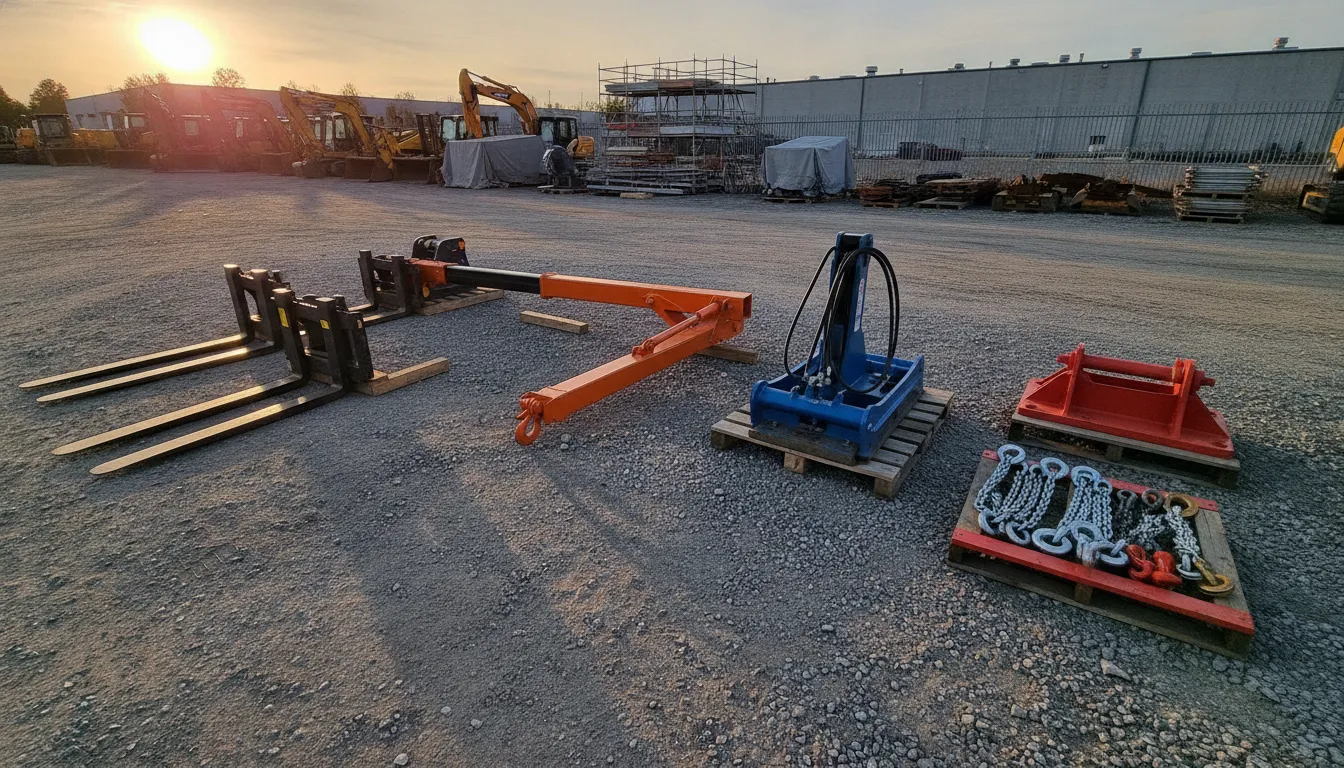
| Attachment Type | Best Use | Main Benefit |
|---|---|---|
| Lifting Booms | Long reach or high lifts | Turns a truck into a crane |
| Stone Clamps | Moving granite or marble slabs | Safe grip on smooth stone |
| Fork Hooks | Lifting with chains | Low cost and easy to use |
| Extensions | Oversized or long pallets | Better support for long loads |
Which forklift attachments work for stone and slabs?
Moving large stone slabs is a big job. These pieces are very heavy but can break easily. You must pick the right tools to move them safely. The best forklift attachments help you do the work with less risk. They keep your crew safe and stop the stone from cracking. You should think about the size and weight of your slabs first. This helps you find a tool that fits your shop's needs.
Slab clamps and lifters
Slab clamps are key for stone shops. These tools use a grip to hold the stone from the sides or top. Many lifters use a gravity clamp. This means the weight of the stone helps the tool hold on tighter. You should look for clamps with soft pads. These pads help the tool grab the stone without leaving marks or scratches. Using the right granite slab lifting equipment keeps the load steady as you drive.
It is also vital to think about how the tool holds the stone. Stone slabs can have small cracks you cannot see. If a tool puts too much force on one spot, the stone might snap. Good handlers spread the pressure out. This makes it safer to move thin slabs or stones with large veins. It also helps you move slabs into tight spots on a rack. This kind of material handling equipment makes your shop work better.
Forklift booms and jib cranes
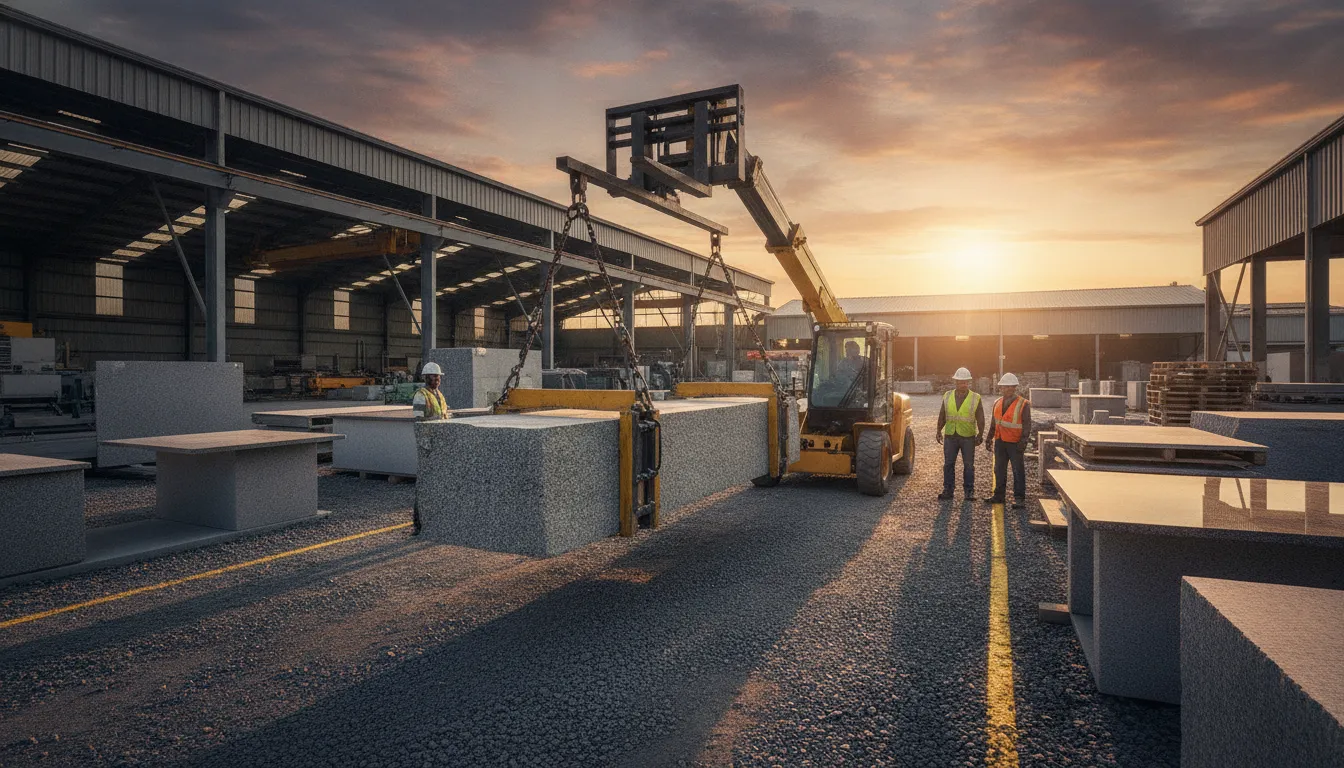
A boom is another great choice for stone. This tool slides onto the forks of your truck. It turns the forklift into a mobile crane. You can use a swing arm forklift boom to lift slabs from the top. This is helpful when you cannot reach the stone from the side. Booms give you more reach. You can pick up slabs that are behind other stones on a truck or in a rack.
Booms also help with exact placement. You can swing or tilt the load to set it down right where it needs to go. This is great for loading CNC machines or saw tables. By using a boom, you do not have to lift the stone by hand. This keeps your workers away from the heavy load. Most booms have many hook points. This lets you change the lift point based on the weight of the slab. It is a smart way to use your truck for more types of work.
Safety and load limits
Safety is the most vital part of using new gear. Every tool you add to a truck has its own weight. This weight pulls the front of the truck down. It changes the center of gravity for the whole machine. OSHA notes that forklift attachments reduce the net lifting capacity of your truck. You must know how much the tool weighs before you pick up a slab. If you do not, you might lift too much and tip the truck over.
You must also update the data plates on your truck. These plates show how much weight the truck can lift. When you add a new tool, the old plate is no longer right. You need a new one that shows the new limits. Operators also need training on how the new tool moves. A truck feels different when a heavy boom is on the front. It might take longer to stop or turn. Regular checks are also needed. Look for cracks in the welds or bends in the metal. Keeping the gear in good shape keeps everyone on the site safe.
How do you choose the right forklift attachment?
Picking the right gear for your lift truck is about more than just finding a tool that fits. Adding a new part changes how your machine works. It can shift the balance of the truck and reduce how much weight you can safely carry. To stay safe and keep your job site moving, you need a clear plan. Following a set path helps you find the best tool for your task while keeping your crew out of harm's way.
Matching the tool to the load
You must first look at what you need to move. The shape, weight, and size of your load decide which forklift attachments will work best. For example, if you handle stone or slabs, you might need a telescopic forklift boom to reach deep into a rack. If you move bulk goods like sand or gravel, a stone bucket or hopper might be better. Knowing your material helps you pick a tool that won't cause damage or drop the load. Stone slab handlers must spread pressure evenly to keep the slab from cracking.
Verifying truck stability and capacity
Every tool you add has its own weight. This weight cuts into the net lifting power of your truck. According to OSHA standards, you must update your data plates when you add new gear. The new part shifts the load center further away from the truck's balance point. This change can make the machine tip over more easily. Always check that your truck can handle both the tool and the load together. Treat an unloaded truck with a tool as if it were partly loaded to stay safe.
Checking mount and power needs
Some tools need more than just a place to hang. If your tool uses clamps or rotators, you need an extra power system that matches. Look at how the tool mounts to your forks or carriage. Quick-connect parts can help you switch tools fast, but they must fit your machine well. Before you buy, make sure your material handling equipment is a good match for your current fleet. Check that all lines and valves work with the tool's needs.
Inspecting the work area and crew
A new tool might make your truck wider or taller. You must check your work site for tight spots or low doors. A long boom might hit a wall in a small shop. Also, every driver needs to know how the new gear feels. New tools change what the driver can see and how the truck turns. Every person on your crew needs to learn the rules for the new tool before they start work. Proper training keeps your site safe and helps you get the job done right.
- Define the load details. Look at the weight, shape, and how fragile the items are. This step helps you find a tool that grips or lifts the load without causing stress or breaks.
- Check the truck capacity. Factor in the weight of the new tool. Ensure your truck can still lift the target weight without losing balance or tipping forward during a turn.
- Verify the load center. New gear moves the weight further away from the truck's balance point. Review your load rating chart to find the new, safe lifting limits for this specific setup.
- Confirm hydraulic and mount fit. Make sure your truck has the right valves and lines for the tool. The mount must lock tight to the carriage to prevent the tool from sliding off or shifting.
- Inspect the work site. Look at aisle widths and ceiling heights in your shop. Ensure the added length or height of the new tool will fit through every door and path you use.
- Review safety rules and labels. Change all tags and decals on your machine to show the new weight limits. OSHA rules say you must mark your truck to show the weight of the new tool.
- Train your operators. New tools change how a truck handles and what the driver can see. Every person on your crew needs specific training on the new tool before they start their first shift.
What capacity and compatibility checks matter before use?
Using forklift attachments changes how your truck works. You must check that the tool and the truck fit well. Safety depends on knowing if your machine can handle the new weight and shape. If you skip these checks, you risk tips and falls. Always verify that your truck is rated for the tool you plan to use.
How weight and balance change
Adding a tool to your forklift shifts its center of gravity. OSHA notes that forklift attachments give a truck a wider range of use but bring critical safety risks related to balance and capacity. The weight of the tool itself takes away from how much the truck can lift. This means you have less net capacity for your actual load. You must find the new lift limit before you pick up any materials.
The tool also moves the load further from the truck. This change increases the load center. A longer load center puts more stress on the truck. It acts like a lever that can tip the machine forward. You should treat a truck with a tool but no load as if it were part loaded. Always check the new balance point before you start your work. This helps keep the truck steady on uneven ground.
Reading data plates and ratings
Every truck has a data plate that shows its lift limits. When you add a tool, that plate may no longer be right. You must update your capacity and use plates when you add a tool. The new plate should show the weight of the truck and the tool as one total. This helps you know the safe limits for your exact setup. Working without a clear data plate is a big safety risk.
You also need to check the carriage class of your truck. Most tools fit a exact class like Class II or Class III. If the tool does not match the carriage, it will not mount in a safe way. Using the wrong mount can lead to the tool falling off during use. Always check that the tool is made for your truck's mount size and type. You may need to ask the maker for a letter to show the tool is safe to use.
Checking hydraulics and mounts
Many tools use oil power to move or grip. These tools need a truck with the right oil lines and valves. You must make sure your truck has the extra lines needed to run the tool. Without these parts, a clamp or rotator will not work. Check that the oil flow and pressure match what the tool needs. Wrong oil pressure can damage the tool or the truck's pump.
Mounting the tool also needs a close look at the parts. Look at the welds for any small cracks or breaks. Look for any bends in the load-bearing metal. You should also check that the tool locks onto the carriage in a firm way. For heavy stone work, you might use material handling equipment that needs exact pins or bolts. Good mounting keeps the tool and the load safe during the move. Check these mounts at the start of each shift.
- Check the data plate for the new lift rating.
- Check the carriage class and mounting style.
- Look at oil hoses and parts for leaks.
- Look for cracks in the welds and frame of the tool.
- Test how well you can see from the driver's seat.
- Verify that the tool has a lock to keep it on the carriage.
How can crews use forklift attachments safely?
Using forklift attachments can give your truck many new uses on a jobsite. These tools let your crew move stone slabs, heavy bags, or large steel beams with ease. But these tools also change how your forklift works. You must follow strict safety steps to keep your crew safe. If you do not use these tools the right way, you risk tip-overs or dropped loads.
Track changes in balance and limits
Adding a tool to your forks changes the truck's balance point. It often moves the load center further away from the truck. This change shifts the weight and can make the truck less stable. According to OSHA safety rules, any tool you add to a truck changes its lifting limit. The weight of the tool itself takes away from how much the truck can carry.
You must update the tags and plates on your truck when you use new tools. These plates show the new weight limits for the truck and tool set. Never guess how much weight your truck can lift with an attachment. Always check the load chart to be sure you are within safe limits. If the truck does not have a tag for that tool, you must get one before you start work.
Perform routine checks and care
Crews should check all material handling equipment before each shift. Look for cracks in the metal or welds on the tool. If a part looks bent or worn, you must not use it. Small bits of damage can lead to big failures when you lift heavy slabs. Be sure to check these parts every day:
- Load-bearing parts like hooks and pins
- Fluid lines and hoses for leaks
- Bolts and screws for any loose parts
- Welds for small cracks or rust
Clean the gear often so you can spot cracks or rust more easily. Good care keeps your tools working well and helps your crew avoid accidents. If you use a telescopic forklift boom, check the sliding parts to be sure they move smoothly. If a tool fails on the job, it can cause a lot of damage.
Train crews for each new tool
You should never let a worker use a forklift tool without the right training. Every tool has its own set of rules and limits. Drivers need to learn how the truck feels with the new weight. A truck with a tool on it acts like a truck that is partly loaded. This is true even when the tool is empty. Drivers must learn how to turn and stop with this extra weight.
Train your team to watch for blind spots. Large tools can block the driver's view of the path. Use spotters when you move heavy loads in tight spots or near other people. You may also need to set up zones where other workers cannot walk while the lift is in use. Clear rules and training help your crew work fast and stay safe.
How should crews inspect and maintain forklift attachments?
Buying the right tools is only the first step. To keep your work site safe, you must take care of your material handling equipment. Daily checks make sure that your forklift attachments stay in good shape and work as they should. A solid plan for care helps avoid costly delays and keeps your team safe while they work with heavy stone.
Daily check steps
You should look over your gear before you start every shift. Start by looking at the plates and tags on your truck. Rules state you must update plates when you use a telescopic forklift boom or other tools (OSHA). This small step helps you stay within the safe limits of your machine at all times.
Next, check for any signs of leaks in the hydraulic lines. If your tool uses clamps or rotators, the hoses must be tight and have no cracks. Check the pins and bolts that hold the tool to the forklift. They must be tight and in the right spots. If you find any parts that are loose or missing, take the tool out of service right away. A pro should look at it before it is used again.
Finding wear and damage
Wear often happens slowly over time, so you must look for tiny signs of stress. Look at all load-bearing parts to see if they have changed shape or bent. You also need to check every weld for cracks or small gaps. If a weld looks weak, the tool might fail when you try to lift a heavy slab. This could lead to a big mess or bad harm to workers.
Heavy-duty forks also need a close look. You should check the thickness at the heel of the fork to make sure it is still thick enough to be safe. If the metal has worn down too far, you must get new forks. Checking for these wear points is a key part of any set maintenance plan. You should never try to fix a cracked tool with a quick patch or a simple weld on your own.
Best ways to maintain and store gear
Keep your tools clean and dry when you are not using them on the job. Dust, dirt, and grit can get into moving parts and wear them down faster. Store your gear in a safe spot where other trucks will not hit it or knock it over. A strong rack or stand is the best way to store a forklift boom. This keeps it safe and ready for the next use.
Always follow the steps given by the tool maker. They will tell you how often to add grease to joints or check oil levels. Keeping a log of all work and checks can help you see how well your gear is holding up. If a tool starts to show too much wear, replace it before it causes a problem. Taking care of your tools now saves you time and money in the long run.
Explore material handling equipment from Diamond Tool Store before selecting the attachment and lifting accessories for your next job.
Frequently Asked Questions
Can forklift attachments change a forklift's load capacity?
Yes, adding a new tool always lowers the net lifting limit of your truck. The extra weight of the part shifts the balance of the forklift forward. This change raises the risk of a tipover if you do not follow the new load chart. As shown by OSHA, you must update all plates and tags when you use a tool. This step helps make sure your crew stays safe while using the machine on the jobsite.
Are there specialized forklift attachments for stone and slab handling?
Pros in the stone trade use tools like slab lifters and stone handlers to move heavy granite or marble. These parts use special clamps that spread pressure evenly across the slab. This design helps stop cracks or breaks while you move the material. Using the right material handling equipment also lowers the risk of hand or back injury. These tools help workers move large slabs in a safe way without marking or scratching the stone surface.
How does a jib boom crane attachment work on a forklift?
A jib boom tool slides onto the forks of your truck to turn it into a small crane. This part lets you lift and place heavy items that you cannot move with standard forks. You can pick fixed or long reach models for your job. These telescopic forklift booms are great for loading and unloading trucks. They also help you reach over walls or gear in stone shops and on building sites.
When should you replace forklift attachments?
You should check your tools each day and get new ones if you find signs of deep wear or breaks. Look for cracks in the welds or bends in the metal parts. For heavy duty forks, you must check the thickness at the heel to see if they are still safe to use. As shown by OSHA, tools must be part of a set plan for care and repair. Daily checks stop tool failure and keep your crew safe.
Ready to find the right forklift gear for your shop?
Using the wrong tools for stone and slab handling leads to costly mistakes and risky jobs. If you wait to get the right gear, you face more downtime and slower project times. Your team works harder than they need to when you do not have the best tools for your forklift. You can change that right now by choosing gear built for the stone trade. Strong booms and lifters make your work safer and help you finish jobs on time. Every day you delay is a day you lose out on better speed and site safety. Start seeing better results in your yard and shop today with gear you can trust for years. Do not let old tools hold back your shop growth and crew safety.
Ready to talk to a pro? See our full inventory to shop material handling equipment.