Granite polishing pads are diamond tools used to shine stone surfaces through a graduated grit sequence. Stone pros choose between wet and dry pads based on the jobsite and the finish quality they need. Wet pads use water as a coolant to keep the stone cold and flush away dust, resulting in longer tool life and a better high-gloss shine. Dry pads allow faster setup and work best for on-site repairs where water is hard to manage. Both types use a grit range from 50 to 3000 to reach a factory polish.
Wet vs Dry Granite Polishing Pads: What's the Difference?
Wet pads cool with water for better finish and longer life. Dry pads run hotter but need no water setup. Your choice depends on dust rules, tool budget, and whether you work in-shop or on-site.
Choosing between wet and dry pads is the first step in any stone project. Both types of pads use diamond grits to smooth stone, but they handle heat and waste in different ways. Wet pads use water as a coolant. Dry pads rely on airflow and heat-resistant resin. This choice impacts your safety, the finish quality, and how long your tools last.
| Feature | Wet Polishing | Dry Polishing |
|---|---|---|
| Cooling Method | Constant water flow | Air and heat-stable resin |
| Dust Control | Eliminates airborne dust | High dust; needs vacuum |
| Tool Life | Longer pad durability | Shortened by heat buildup |
| Setup Need | Water feed and drainage | Simple; no water needed |
| Finish Quality | Highest gloss potential | High gloss; risks burning |
How heat affects your granite finish
Heat is the main enemy of a high-gloss finish. When you polish stone, friction creates intense heat. This can burn the resin in the pad or mark the stone. Wet polishing pads use a steady stream of water to keep both the tool and the granite cool. This cooling effect leads to a superior surface finish and prevents the stone from cracking. While dry pads have heat-resistant bonds, they still run hotter and need frequent breaks to avoid damage.
Water does more than just cool the surface. It also acts as a lubricant that carries away the tiny bits of stone you ground off. Without water, these bits can get trapped under the pad and create deep scratches. Because of this, wet pads often produce a clearer shine on dark granite. To get the best results, many shops use a wet diamond polishing pads system for all shop-based work.
Managing dust and jobsite safety
Safety is a big factor when picking a polishing method. Dry polishing creates a large amount of fine dust that is hard to control. This dust contains silica, which is a serious health hazard for stone workers. If you work dry, you must use vacuums and wear a mask. Wet polishing is much safer because it turns the dust into a slurry. This keeps the silica out of the air you breathe.
But wet work brings its own set of tasks on the jobsite. You must manage water runoff to protect the workspace from damage. This often means using splash guards, water vacuums, and waterproof aprons. For quick repairs or jobs in finished homes, dry pads are often better. You can fix a scratch without the mess of a water tool as long as you have good dust control in place.
What Grit Sequence Delivers a Mirror Finish on Granite?
A full 50-to-3000 grit progression is the only reliable path to a high-gloss mirror finish on granite. Skipping grits or rushing the sequence leaves visible scratches that polishing cannot fix.
Getting a mirror shine on stone needs a clear path through many diamond tools. This task starts with heavy work to remove material and ends with a high gloss buff. Using a full set of 3-step granite polishing pads or a standard multi-step kit makes sure you remove old marks without making new ones. Following the right order is the only way to get a professional result.
Initial Grinding and Stock Removal
The first stage of work aims to shape the edge and remove deep marks from tools. Pros often start with a 50 or 60 grit pad. Grit 50 pads serve as the initial coarse step to remove stock and flatten the stone. You then use 100 and 200 grit pads to smooth the rough feel. If you skip these low grits, you will leave deep marks that you cannot fix later in the job.
Honing and Pre-Polishing the Stone
Once the deep marks are gone, the honing phase starts with 400 and 800 grit pads. These middle steps change the stone from a dull look to a smooth feel. Moving to 1500 grit starts to bring out the color and depth of the stone. This stage is key because it prepares the stone for the final high shine.
Final Gloss and Buffing for Luster
The final shine comes from the highest grit levels. A 3000 grit pad is the final step in a standard order to get a high gloss finish. After the diamond grit work is done, many shops use buffing pads to remove small marks and add more shine. These pads give the stone the deep look that people want for fine countertops. Using a full kit ensures you have every grit you need from start to finish.
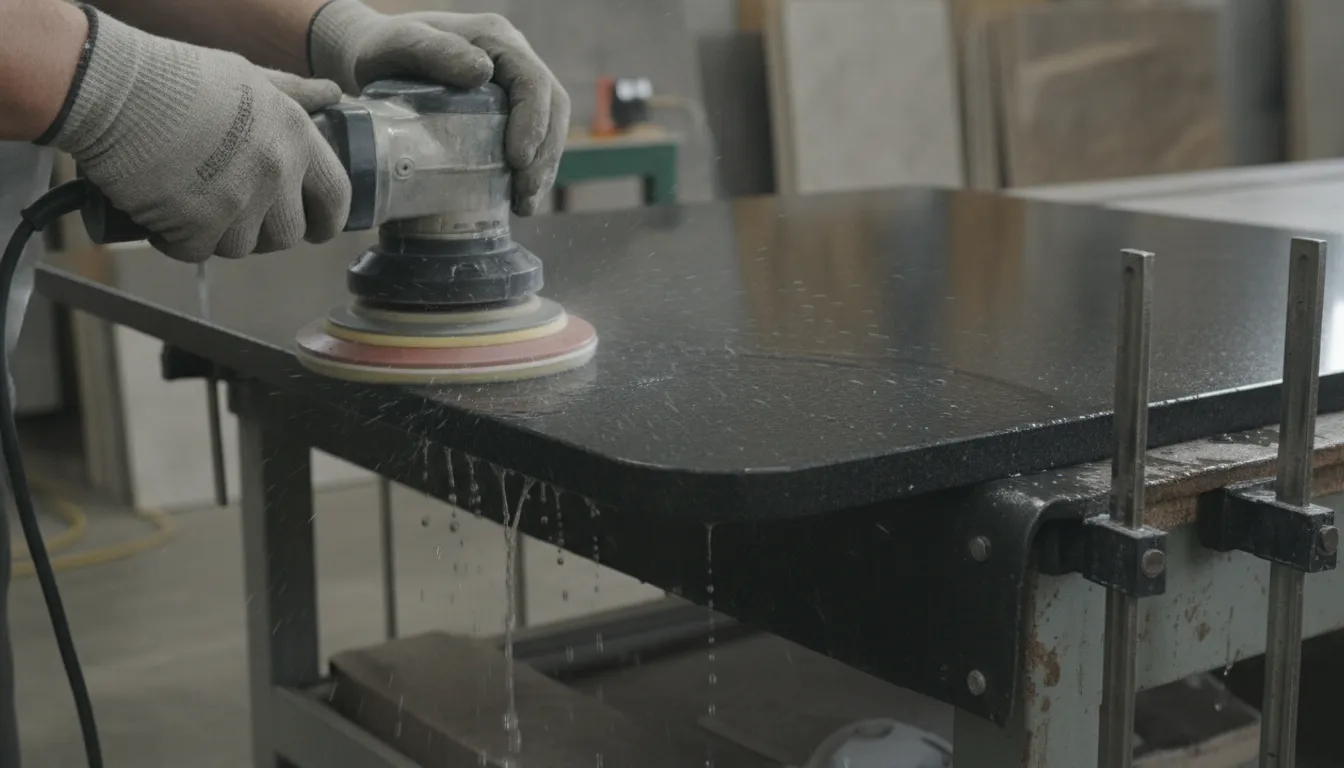
Superior Results: Why Wet Polishing Wins on Granite
Wet polishing delivers better surface quality, longer tool life, and safer working conditions. The water coolant prevents heat damage, flushes away debris, and controls silica dust that dry methods cannot contain.
Better Surface Quality and Precision
Wet polishing is the gold standard for getting a mirror shine on stone. Using water keeps the surface cool during high-speed work. This helps you avoid burning or staining the granite. High heat can cause the resin in the pads to melt onto the stone. This leaves a dark mark that is very hard to remove. The water acts as a slick layer that lets the diamonds cut cleanly. Small changes in grit size also change the look of the edge. The water flushes away tiny bits of stone. This stops them from scratching the surface as you work. You get a deeper gloss that lasts much longer. It is the best choice for high-end granite jobs.
Longer Tool Life and Lower Costs
When you use wet granite polishing pads, your tools stay in good shape for a longer time. The water carries heat away from the resin bond. High heat is the main reason that diamond tools fail. Without this cooling, the pads can wear down very fast. Because the pads stay cool, the diamond bits can do their job without breaking off too soon. This means you spend less money on new pads over time. A cool pad keeps its shape better. This allows for even pressure across the stone. You will not have to swap pads as often during a big job. This saves you both time and money. Pro shops know that the extra cost of water is small compared to the cost of new tools.
Safer Work and Dust Control
Health is a big concern in any stone shop. Dry polishing creates a lot of dust that can be bad for your lungs. This dust contains silica, which is a known health risk. Wet polishing is the best way to control these small bits. The water traps the dust before it gets into the air you breathe. This makes the job much safer for your team. While handling the water and slurry can be messy, the safety gains are worth the extra cleanup. You will need a way to catch the water and mud. But a clean shop is a safe shop. Keeping the air clear is a top goal for any pro shop. It helps you stay in line with safety rules and protects your crew. Shop wet diamond polishing pads at Diamond Tool Store for cleaner, safer results.
When Should You Use Dry Granite Polishing Pads?
Dry pads are the right call for on-site repairs, mobile fabrication without water access, and quick touch-ups where setting up a wet system is impractical. Pair them with proper dust control and respiratory protection.
While wet polishing is the standard in most shops, dry granite polishing pads are vital for field work. These tools let fabricators work in spots where water access is limited. Because dry diamond polishing pads work without a water cooling system, they make on-site fabrication much easier for mobile teams. This method is often the best choice when you need to finish a job quickly without a wet system.
On-site repairs and small jobs
Dry polishing is perfect for quick touch-ups or small repairs on installed stone. Setting up a full water feed and splash guards for a five-minute fix is not practical. For these small tasks, dry pads offer great speed. They allow you to get in, fix a scratch, and leave the jobsite clean. Mobile crews often keep a set of wet or dry granite pads ready for these exact jobs.
Mobile fabrication without water
Many jobsite locations do not have easy access to water or a way to drain slurry. In these cases, dry polishing is the only way to work. Dry pads run at higher RPM ranges to keep the tool effective. While dry pads may have a shorter life than wet ones, the time you save on setup makes them a smart tool for any mobile kit.
Safety and dust control for dry work
Working dry creates a major safety risk that every pro must manage. Dry polishing produces high levels of crystalline silica dust compared to wet methods. This fine dust can cause serious lung issues if you do not use the right gear. You must use respiratory protection and dust shrouds when running dry pads. Always pair your dry pads with a good vacuum system to keep the air safe for you and your clients.
RPM and Speed Control: How to Prevent Burning the Stone
Heat is the biggest risk when polishing granite. Use a variable speed grinder, match RPM to the pad type, monitor the stone for color changes, and apply light pressure for the final gloss steps.
Heat is the biggest risk when you polish granite. If the stone gets too hot, it can burn or lose its color. This damage often ruins the finish and may mean you have to start the job again. To get the best results, you must control your tool speed. Keeping the RPM right helps the stone stay cool and lets the diamond pads work well.
Variable Speed Grinders
Professional stone workers use a variable speed angle grinder to polish edges. These tools let you change the speed to match the stone and the pad grit. Low speeds reduce heat, while high speeds help with the final shine. Using a tool with only one speed makes it hard to manage heat and often leads to burned spots on the stone.
Why does heat matter for granite polishing pad performance?
Wet polishing is safer for the stone because it keeps the surface cool. Water acts as a lubricant to stop heat from building up during fast work. Dry polishing is different. It often runs at 8,000 to 10,000 RPM, which makes much more heat. When you work dry, you must move the tool fast and use light touch to avoid burns. Proper tool geometry also helps spread heat and pressure across the granite polishing pads.
- Pick a good variable speed grinder that lets you make small RPM changes.
- Match your RPM to the pad type to keep dry pads from melting the glaze.
- Move through each grit step while keeping your tool speed steady.
- Watch the stone for any signs of high heat or color changes.
- Use light pressure when you use high-performance granite polishing pads for the last steps.
Which Granite Polishing Pads Are Best for Your Shop?
The best pads match your jobsite conditions: wet pads for in-shop production work and dry pads for mobile repairs. Match the grit sequence to your stone type, and confirm pad diameter and arbor fit your grinder.
Selecting the right high-performance granite polishing pads is a key choice for any stone shop. Your pick affects both the speed of your work and the quality of the final shine. You must match your tools to your shop setup and the specific needs of each job. The Diaplus Conquer 3-step system works wet or dry -- see which setup fits your workflow.
Does your shop need wet or dry polishing pads?
The first step is to pick between wet and dry pads based on your jobsite. Wet polishing is often best for shop work because it keeps the stone cool and prevents burning. Wet pads also last longer and create less dust, but you will need a way to manage the water. Dry pads are better for on-site work where water is not easy to use. These pads do not need a water system and are easier to set up for quick fixes. However, dry work creates more dust and requires proper respiratory protection.
Pick the right grit sequence
Most shops use a standard set of 7 to 8 pads. This range starts at 50 grit for coarse work and ends at 3000 grit for a high gloss. For the best results, you might choose a larger 16-piece set that has extra steps and buffing pads. Using wet or dry granite pads in a 3-step system can also save time while still giving a great finish.
Check tool size and fit
Pad diameter is another vital factor for your shop. Most pros use 4-inch pads for edge work because they fit into tight spots. Larger 5-inch pads are better for flat surfaces like countertops. You also need to ensure your backing system fits. Most grinders use a 5/8-11 thread backer to hold the pad in place. High-quality pads are built to last through many jobs, so choosing durable tools helps your shop stay productive.
Frequently Asked Questions
Can you polish scratches out of granite?
Yes, you can use diamond polishing pads to remove surface scratches and restore the natural shine of stone. These tools work by grinding down the area around the mark until the surface is level again. You must follow the full grit sequence to ensure a smooth and glossy finish. Diamond Tool Store stocks a range of pads for restoring the luster and fixing minor damage on natural stone surfaces.
Can I use granite polishing pads on other stones?
Granite polishing pads are very versatile and work on many types of hard stone surfaces. You can use these same tools to polish marble, concrete, and engineered stone products. The resin bond and diamond grit provide the same high quality results across these different stone types. This helps shops that handle many stone jobs and need a good way to finish edges or surfaces.
What is the best speed for polishing granite?
The ideal speed for polishing depends on whether you are working wet or dry. For dry polishing, pros often work in the 8,000 to 10,000 RPM range. Using a tool with different speed settings is best because it lets you control the heat and stop stone damage. Lower speeds are often better for the final buffing stages to get a clear shine. High speeds can cause the stone to burn if you do not have enough water to cool the surface.
Do I need a special machine for granite polishing pads?
You do not need a custom machine, but you do need a tool with a compatible arbor. Most diamond pads attach to a rubber backer that uses a 5/8-11 thread. This size fits the standard angle grinders and polishers used in the stone trade. A tool with variable speed settings is a good choice so you can change the RPM for each grit level. This helps you avoid burning the stone and helps the pads last as long as possible.
Ready to find the best granite polishing pads for your shop?
Stone shops cannot afford to lose time or money on poor finishes. Using dull pads risks burning the costly stone or leaving deep marks. These errors delay your work and hurt your good name with your clients. They want a mirror shine that only high-quality diamond tools can provide. Good pads stay cool and keep their grit much longer. This helps you finish more jobs in less time and saves your shop money. Do not let old tools slow your shop or lead to wasted slabs of granite. A fresh set of pads can fix the issue today. Buying the right wet or dry pads keeps your team busy. It ensures every stone top has a perfect edge for your customers.
Ready to explore our selection? Contact Diamond Tool Store today to explore our full selection of diamond polishing pads, backing pads, and complete kits for every stone fabrication need.
## AuthorSally Thedwall is a content specialist at Diamond Tool Store with deep knowledge of stone fabrication tools, diamond abrasives, and material handling equipment for the construction and restoration industries.