


Stone Grip-Tie Veneer Re-Anchoring System - Box of 25
Stone Grip-Tie Veneer Re-Anchoring System - Box of 25 - 3-1/2 is backordered and will ship as soon as it is back in stock.
Safe & Secure Payments

-
Sale
Prosoco
Concrete Hardener, Densifier and Dustproofer - LS/CS
Sale price$61.30 – $227.25Save up to $25.25Unit price -
-
Sale
Prosoco
Sale price $291.75 Was: Regular price $320.93 Save $29.18Unit price -
-
Sale
Prosoco
Cat 5 R Guard Elastomeric Weatherproofing Membrane
Sale price$793.50 – $17,670.00Save up to $1,963.33Unit price -
-
Sale
-
-
Sale
Prosoco
Prosoco Consolideck LS Lithium Silicate Concrete Densifier
Sale price$398.16 – $428.50Save up to $70.50Unit price -
-
Sale
Prosoco
Cleaner/Degreaser Commercial-Strength Detergent
Sale price$288.73 – $9,981.33Save up to $1,109.04Unit price -
-
Sale
Prosoco
Consolideck BD1 Concrete Floor Densifier & Hardener
Sale price$909.58 – $6,298.67Save up to $699.85Unit price -
-
Sale
Prosoco
First Cut Concrete Slurry Cleaner
Sale price $295.58 Was: Regular price $325.14 Save $29.56Unit price -
-
Sale
Prosoco
DensiKure Concrete Curing Compound
Sale price $368.08 Was: Regular price $404.89 Save $36.81Unit price -
-
Sale
Prosoco
R Guard Porous Prep Water-Based Sealer - Case of 4 Gallons
Sale price $399.20 Was: Regular price $439.12 Save $39.92Unit price -
-
Sale
-
-
Sale
Prosoco
First Cut with Densifier - 5 Gallon
Sale price $363.58 Was: Regular price $399.94 Save $36.36Unit price -
-
Sale
-
-
Sale
Prosoco
R-Guard FastFlash Liquid Flashing & Waterproofing Compound
Sale price$655.60 – $684.33Save up to $68.43Unit price -
-
Sale
Prosoco
R Guard Fast Flash Roller Grade Waterproofing Membrane Compound - 2 Gallons
Sale price $354.73 Was: Regular price $390.20 Save $35.47Unit price -
-
Sale
-
-
Sale
-
-
Sale
Prosoco
R-Guard Cat 5 Rain Screen Air & Water Barrier Membrane - 5 Gallon
Sale price $833.17 Was: Regular price $916.49 Save $83.32Unit price -
-
Sale
Prosoco
R Guad Cat 5 ICF Fluid Applied Air & Water Barrier Membrane
Sale price$793.50 – $17,670.00Save up to $1,963.33Unit price -
-
Sale
Prosoco
Prosoco Asphalt Tar Remover - 25 Gallons
Sale price $1,070.83 Was: Regular price $1,177.91 Save $107.08Unit price -
-
Sale
Prosoco
Prosoco Sure Klean 101 Lime Solvent Concentrated Masonry Cleaner
Sale price$444.58 – $818.58Save up to $81.86Unit price -
-
Sale
Prosoco
Natural Stone Treatment WB Water Repellent
Sale price$298.07 – $354.83Save up to $35.48Unit price -
-
Sale
Prosoco
Natural Stone Treatment Water Repellent
Sale price$399.07 – $474.00Save up to $47.40Unit price -
-
Sale
Prosoco
Saltguard Penetrating Water and Salt Barrier
Sale price$343.47 – $398.33Save up to $39.83Unit price -
-
Sale
Prosoco
VB Vapor & Air/Water Resistive Barrier
Sale price $276.25 Was: Regular price $303.88 Save $27.63Unit price -
-
Sale
Prosoco
Siloxane PD Pre-Diluted Water Repellent - Bulk
Sale price$2,583.17 – $6,650.67Save up to $738.96Unit price -
-
Sale
Prosoco
R Guard Joint & Seam Filler - Bulk
Sale price$17,742.20 – $23,797.50Save up to $1,252.50Unit price -
-
Sale
Prosoco
R-Guard Spray Wrap MVP Air & Water-Resistive Barrier - Bulk
Sale price$2,601.50 – $7,021.33Save up to $780.15Unit price -
-
Sale
Prosoco
Sale price $19,748.00 Was: Regular price $21,942.22 Save $2,194.22Unit price -
-
Sale
Prosoco
R-Guard FastFlash Liquid Flashing & Waterproofing Compound - Pallet
Sale price$21,287.00 – $28,575.00Save up to $3,175.00Unit price -
-
Sale
Prosoco
First Cut with Densifier - 55 Gallon
Sale price $3,758.33 Was: Regular price $4,134.16 Save $375.83Unit price -
-
Sale
Prosoco
Blended Densifier Concrete Surface Hardener - Bulk
Sale price$2,716.08 – $6,298.67Save up to $699.85Unit price -
-
Sale
Prosoco
Consolideck Guard EXT Exterior Concrete Protective Coating - 55 Gallon
Sale price $5,850.17 Was: Regular price $6,435.19 Save $585.02Unit price -
-
Sale
Prosoco
Prosoco Sure Klean Tilt-Up Klean Bond Breaker Residue Cleaner - 55 Gallon
Sale price $3,553.92 Was: Regular price $3,909.31 Save $355.39Unit price -
-
Sale
Prosoco
Saltguard WB Water-Based Chloride Screening Sealer - Bulk
Sale price$3,356.83 – $7,693.33Save up to $854.82Unit price -
-
Sale
Prosoco
Saltguard Penetrating Water and Salt Barrier - Bulk
Sale price$4,214.83 – $9,880.00Save up to $1,097.78Unit price -
-
Sale
Prosoco
Natural Stone Treatment Water Repellent - Bulk
Sale price$5,036.17 – $13,064.00Save up to $1,451.56Unit price -
-
Sale
Prosoco
Natural Stone Treatment WB Water Repellent - Bulk
Sale price$3,785.83 – $9,432.62Save up to $510.91Unit price -
-
Sale
-
-
Sale
-
-
Sale
Prosoco
Concrete Hardener, Densifier and Dustproofer - LS/CS - Bulk
Sale price$2,277.00 – $8,157.58Save up to $815.76Unit price -
-
Sale
Prosoco
Sale price $8,681.20 Was: Regular price $9,549.32 Save $868.12Unit price -
-
Sale
Prosoco
All Surface Cleaner and Degreaser - 55 Gallon
Sale price $2,757.33 Was: Regular price $3,033.06 Save $275.73Unit price -
-
Sale
Prosoco
Strippable Masking Temporary Protective Coating
Sale price $603.42 Was: Regular price $663.76 Save $60.34Unit price -
-
Sale
-
-
Sale
Prosoco
Iron Stain Remover - Case of 4
Sale price $843.40 Was: Regular price $927.74 Save $84.34Unit price -
-
Sale
Prosoco
Enviro Klean 2010 All Surface Cleaner and Degreaser
Sale price$86.64 – $279.92Save up to $27.99Unit price -
-
Sale
-
-
Sale
Prosoco
PROSOCO BMC II White/Pastel Base Color Coating - 5 Gallon
Sale price $694.83 Was: Regular price $764.31 Save $69.48Unit price -
-
Sale
Prosoco
PROSOCO BMC II Tint Base - Water Repellent Color Coating
Sale price $662.67 Was: Regular price $728.94 Save $66.27Unit price -


Product Description
Stone Grip-Tie Veneer Re-Anchoring System — Retrofit Re-Anchoring for Unstable Stone and Precast Panel Facades
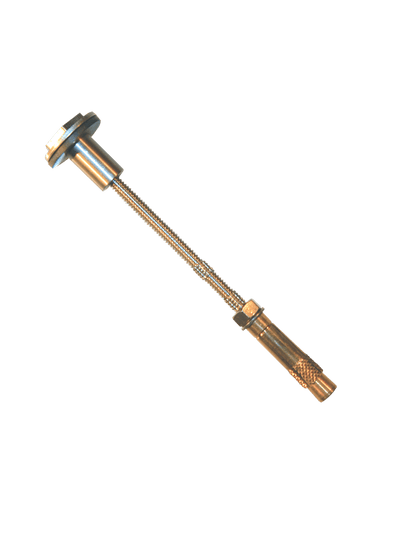
The PROSOCO Stone Grip-Tie is a mechanical masonry anchoring system engineered for retrofit re-anchoring of unstable dimensional stone and precast panel facades to their parent structures. Designed for veneers less than 3 inches thick, it provides a positive, structural connection between the facade and backup without the costly removal and resetting of existing panels. The system is suited for contractors and restoration professionals working on building envelope repairs where existing anchor failure, oxidation, or inadequate original ties have compromised facade stability.
Unlike non-mechanical anchoring methods, the Stone Grip-Tie delivers more effective and predictable load resistance, handling bilateral live-load resistance, uni-directional forces, support loading, and combinations of these variables. No grout or epoxy resin is required, simplifying the installation process and reducing dependencies on specialty adhesive materials on the job site.
Technical Specifications
| Specification | Details |
|---|---|
| Application | Re-attaches existing veneers less than 3 inches thick |
| Use Case | Retrofit re-anchoring of unstable dimensional stone and precast panel facades |
| Load Resistance | Bilateral live-load resistance, uni-directional forces, support loading, and combinations |
| Material | Austenitic stainless steel (300 series shaft, 304 S.S.) and corrosion-resistant brass expander elements |
| Installation | Installs with ordinary hand tools and drilling techniques |
| Connection Type | Concealed or face-mounted panel face connections |
| Finish Option | Exposed face-mounted anchors can be powder-coated to match existing stone colors |
| Adhesive Required | No grout or epoxy resin required |
| Facade Pilot Hole Diameter | 1/2 inch |
| Bearing Washer Diameter | 1-1/4 inch (large flat bearing area: 1.4 in²) |
| Torque (Setting) | 50–100 in-lbs (shaft); 20–25 in-lbs (head) |
| Grip-Max Ultimate Capacity | 2,200 lb (Type 2 solid backup) |
| Toggle Ultimate Capacity | 425 lb (Type 2LD) |
| Part Number (Example) | 62300-112N350 (3.5" shaft, A dimension 1-5/8" – 2-7/8") |
Key Features & Benefits
Positive Mechanical Lock Without Adhesives
The Stone Grip-Tie creates a positive mechanical connection between the veneer and the backup structure without relying on grout or epoxy resin. This eliminates cure-time delays and removes a category of material handling and failure risk from the job site. Contractors get a reliable, immediate mechanical engagement upon installation.
Corrosion-Resistant Construction for Long-Term Durability
Anchor components are manufactured from austenitic stainless steel and corrosion-resistant brass, materials selected specifically for long-term performance in demanding exterior applications. This addresses one of the primary causes of original anchor failure — oxidation and corrosion — ensuring the retrofit solution outlasts the conditions that made re-anchoring necessary.
Handles Multiple Load Types
The system is engineered to accommodate bilateral live-load resistance, uni-directional forces, support (dead) loading, and combinations of these variables. This flexibility allows a single product line to address the full range of wind suction, wind compression, and gravity loading scenarios encountered on building facades.
Concealed or Exposed Aesthetic Options
Retrofit connections can be concealed using like-material Dutchmen or plugs, making repairs nearly invisible on finished facades. Alternatively, exposed face-mounted anchors can be powder-coated to match existing stone colors, giving specifiers and building owners an aesthetic option that can even update the appearance of the building.
Fast Installation with Standard Tools
The Stone Grip-Tie installs using ordinary hand tools and standard drilling techniques — no specialty equipment required. The straightforward process (drill, insert, torque, finish) allows crews to complete re-anchoring work efficiently without a steep learning curve or equipment mobilization overhead.
More Effective Than Non-Mechanical Methods
The manufacturer states the system is more effective and predictable than non-mechanical anchoring approaches. For contractors working on life-safety facade applications, this predictability in load performance is a critical advantage when specifying and documenting a retrofit repair.
Common Applications
Type 1 — One-Direction Wind Load Restraint
Restrains stone veneer panels against wind suction (movement away from the structure) to solid or hollow backup. Used where only outward load resistance is required.
Type 2 — Two-Direction Wind Load Restraint
Provides bilateral restraint against both wind suction and wind compression effects on stone and precast panel veneers. Grip-Max connection delivers up to 2,200 lb ultimate capacity to solid backup.
Type 2LD — Light-Duty Two-Direction Wind Load Restraint
A light-duty toggle-based option for dual-direction wind restraint where lower load demands apply. Toggle ultimate capacity of 425 lb suits applications where full Grip-Max capacity is not required.
Type 3 — One-Direction Wind Restraint Plus Dead Load Support
Combines outward wind load restraint with panel weight (dead load) support to solid backup. Appropriate where the existing anchorage provided no vertical support and gravity loading must also be addressed in the retrofit.
Retrofit Facade Stabilization
Addresses facade instability caused by inadequate original ties, rusting or oxidized existing anchors, or delamination of composite panels. Provides a cost-effective alternative to full panel removal and resetting.
Compatible Materials
- Dimensional stone veneer (less than 3 inches thick)
- Precast panel facades
- Concrete backup structures
- Brick backup structures
- Masonry backup structures
- Structural steel backup
- Wood stud backup
- Steel stud backup
- Hollow and solid backup materials (with appropriate anchor series selection)
Product Documents
Application Instructions
Step 1: Locate Anchor Placement
- Locate anchor placement per the specified location plan.
Step 2: Drill the Facade
- Drill a 1/2-inch diameter hole through the stone using a suitable stone-drilling drill bit, without percussion.
Step 3: Drill the Backup
- For solid backup: drill a 1/2-inch diameter hole into the backup, on center with the facade hole, to a depth 2 inches deeper than the "A" dimension (face of facade to face of backup). Blow out drill fines.
- For hollow backup: drill a 3/8-inch diameter hole into the hollow backup, on center with the facade hole.
- For steel backup: drill a 7/16-inch diameter hole into the steel backup, on center with the facade hole.
Step 4: Countersink (If Required)
- For a countersink finish, drill a counterbore 1-1/8-inch minimum diameter, 3/8–1/2 inch deep from the face of the stone, on center with the previously drilled holes.
Step 5: Set the Anchor Shaft
- Assemble the anchor shaft (without head) to the Grip-Tie 501 Setting Tool.
- Slide the assembly through the drilled holes until the expansion anchor bottoms in the backup hole.
- Tighten by turning clockwise until 50–100 in-lbs of torque is reached.
- Remove the setting tool.
Step 6: Attach the Head
- Attach the Stone Grip Hex-Tie Head and bearing washer with EPDM washer to the anchor shaft using an appropriate hex socket (3/4-inch socket required).
- Hand-tighten clockwise until the washer and head bottom out into the counterbore.
- Tighten to 20–25 in-lbs. Remove tool.
Step 7: Finish
- Patch or conceal the anchorage per specification requirements using like-material Dutchmen or plugs, or leave exposed and powder-coat to match existing stone color if aesthetic exposure is preferred.
Frequently Asked Questions
Q: Do Stone Grip-Ties require grout or epoxy resin for installation?
A: No. The Stone Grip-Tie system is fully mechanical and does not require any grout or epoxy resin, simplifying installation and eliminating adhesive cure time from the schedule.
Q: What veneer thickness is the Stone Grip-Tie rated for?
A: The system is designed to re-attach existing veneers less than 3 inches thick, covering the range typical of dimensional stone and precast panel applications.
Q: Can the anchors be used on both hollow and solid backup structures?
A: Yes. Different anchor series are available depending on the backup material. The 6000-1 Series is for solid backup, the 6100-1 Series accommodates hollow and solid backup, and additional series address steel and other substrates. Selection depends on the backup type and load requirements.
Q: Can the installed anchors be hidden after installation?
A: Yes. Retrofit connections can be concealed using like-material Dutchmen or plugs for a near-invisible repair. Alternatively, exposed face-mounted anchors can be powder-coated to match existing stone colors.
Q: What load types can the Stone Grip-Tie system handle?
A: The system accommodates bilateral live-load resistance (both wind suction and compression), uni-directional forces, dead load support, and combinations of these loading scenarios, depending on the anchor type selected.
Q: Are other shaft lengths available beyond the standard catalog numbers?
A: Yes. The installation guide notes that other lengths are available upon request beyond the standard catalog offerings.
-
Sale
Husqvarna
Husqvarna Hepa Dust Extractor - 130 H
Sale price $6,253.20 Was: Regular price $6,948.00 Save $694.80Unit price -
-
Sale
Husqvarna
Husqvarna K 540i Power Cutting Saw
Sale price $944.10 Was: Regular price $1,049.00 Save $104.90Unit price -
-
Sale
-
-
Sale
Husqvarna
Sale price $2,444.40 Was: Regular price $2,716.00 Save $271.60Unit price -
-
Sale
-
-
 Sale
SaleHusqvarna
Sale price $1,614.60 Was: Regular price $1,794.00 Save $179.40Unit price -
 Sale
SaleHusqvarna
Sale price$118,153.29 – $122,841.00Save up to $13,649.00Unit price -
Sale
Husqvarna
Sale price $5,635.80 Was: Regular price $6,262.00 Save $626.20Unit price -


