Drilling a reinforced concrete slab is not just a matter of choosing a larger bit. Rebar, welded mesh, dense aggregate, and shifting feed pressure can overheat segments, slow penetration, or bind the core before you can recover it. Contractors and fabrication shops in the stone and concrete trades plan the bit choice and the drilling sequence together. Reinforcement changes how the diamond crown wears, and it alters how the core behaves when the bit reaches steel.
The best diamond core bits for reinforced concrete combine a bond matched to the slab. Segments designed to tolerate steel contact, and an operating method that controls heat and dust. Wet drilling is often the stronger choice for sustained work, while careful feed pressure and planned pauses help protect the bit when the crown reaches rebar. Core recovery depends on choosing the right bit up front and reading the drill as it works.
The right setup depends on steel layout, hole diameter, drilling position, and whether the job allows water. Match the bit design to the material first, then adjust the drilling process for the reinforcement you expect to encounter. For a practical starting point, review the reinforced-concrete core bit options available straight from the distributor.
Shop Diamond Tool Store's diamond core bits for reinforced concrete.
How to Choose the Best Diamond Core Bits for Reinforced Concrete
Start with the slab, not the catalog. The concrete's compressive strength, expressed in PSI, affects how quickly a segment can expose fresh diamond. Reinforced concrete adds a second variable because the bit must manage steel without losing its cutting profile.
Review the project drawings, previous core logs, or field information for the slab's approximate strength. PSI should guide the segment and bond decision, but it is not a standalone product specification. A dense, high-strength slab generally needs a segment design that keeps cutting efficiently against hard aggregate. A softer or highly abrasive mix can wear a segment differently. When the exact mix is unknown, choose a bit intended for the application and confirm performance during the first cut.
Account for rebar density and steel contact
Rebar spacing changes the demands on the core bit. Light reinforcement may mean occasional steel contact. Closely spaced bars or reinforcing mesh create repeated transitions between concrete and steel. That work requires a steel-capable bit with a bond and segment grade suited to interrupted cutting.
Look for a core bit described for reinforced concrete, steel reinforcement, or mixed concrete and steel applications. Do not assume that a general masonry bit will handle repeated rebar contact. The segment must expose new diamond while maintaining enough support to resist premature wear during steel contact.
Check the bit design before ordering
- Segment grade: Match the segment's intended cutting behavior to the slab hardness, aggregate, and expected reinforcement. Avoid choosing solely by price or appearance.
- Bond: Select a bond that balances diamond exposure and segment life for the material. A mismatch can make the bit cut slowly, polish over, or wear too quickly.
- Diameter: Confirm the finished hole size, wall thickness, and available bit length. The required diameter should also fit the installation clearance and the core-drill setup.
- Arbor and thread: Verify the connection against the drill motor, spindle, adapter, and any extension. Thread mismatch can prevent installation or create a dangerous, unstable setup.
- Wet or dry capability: Confirm the manufacturer's intended operating method. Cooling, dust control, access, and the surrounding work area all influence the correct configuration.
For a practical starting point, review Diamond Tool Store's reinforced concrete core bits by application and compatibility. Then compare the segment construction with the project's concrete and reinforcement conditions.
It also helps to understand how segment profiles and bonding configurations affect cutting behavior. The concrete tools and supplies guide provides broader context for building a compatible setup around the bit.
Why Does Rebar Make Core Drilling Harder?
Concrete and reinforcing steel do not cut the same way. Concrete abrades the diamond segments gradually, while rebar presents a hard, concentrated interruption.
That change can increase heat, vibration, and segment wear at the point of contact. A bit that performs well in plain concrete may struggle when steel occupies part of the cutting path.
Why steel contact stresses the bit
A core bit cuts concrete through exposed diamond and the bond that holds each abrasive particle. When the segment reaches steel, the cutting action changes abruptly.
Soft bonds can open quickly in hard concrete because they release worn diamonds and expose fresh edges. That behavior is useful in concrete, but repeated steel contact can remove bond material quickly at the segment face.
Rapid wear may reduce cutting efficiency before the rest of the segment is ready to work. It can also encourage uneven contact, especially when only one side of the core intersects a bar.
Some drill-head designs address this transition with hard-metal bits projecting radially beyond the head circumference. The design helps maintain hole diameter when the head reaches steel reinforcement.
Drilling-dust grooves between those bits also support debris removal. These design details matter when evaluating reinforced concrete core bits for a job with known rebar.
Use vibration and pitch as early warnings
Experienced operators often hear and feel the material change before the bit fully engages the bar. Concrete and steel create distinct vibrational and acoustic signatures during core drilling.
That difference is documented in government research on drilling disturbances from reinforced concrete work. The sound and feedback are not a substitute for a rebar scan, but they provide useful operating information.
As the pitch sharpens or the vibration becomes more metallic, ease off the feed pressure. Keep the bit aligned, maintain the correct rotation, and let the diamonds cut rather than forcing the head.
A sudden change in resistance deserves attention. Do not respond by leaning harder into the machine. Excess feed can increase heat and accelerate damage while the bit crosses a narrow steel section.
Adjust the cut before damage spreads
When steel contact is expected, select a bit and machine combination intended for reinforced concrete. Confirm the arbor, diameter, rotation requirements, cooling method, and available clearance before starting.
Watch the slurry or dust, motor load, and core movement as the cut progresses. A stable cut should recover after the bar passes. Persistent binding suggests misalignment, packed debris, or a segment problem.
Pause when conditions become unstable. Clear the hole if needed, inspect the segment face, and restart with controlled pressure. That approach protects the bit and produces a more predictable core.
The goal is not simply to penetrate the steel. It is to preserve the hole diameter, keep the cut true, and finish the opening without sacrificing usable segment life.
Wet or Dry Core Drilling: Which Is Better for Reinforced Slabs?
Wet and dry core drilling can both work on reinforced concrete, but they suit different jobsite conditions. The right choice depends on access to water, dust restrictions, drilling speed, and how often the bit will encounter rebar.
Wet drilling uses water to cool and lubricate the diamond segments. It usually suits deeper holes, repeated production work, and slabs where dust control is a priority. Dry drilling avoids slurry and simplifies setup, which can help indoors or near finished surfaces. However, the operator must manage airborne dust and heat carefully.
The table below compares the main tradeoffs when selecting core bits for reinforced concrete.
| Consideration | Wet core drilling | Dry core drilling |
|---|---|---|
| Coolant and lubrication | Water cools the segments and flushes drilling debris from the hole. | Airflow and controlled feed pressure provide cooling without water. Shorter passes may help manage heat. |
| Diamond segment type | Uses wet-rated segments designed to work with water and continuous slurry removal. | Uses dry-rated segments and barrel designs intended to tolerate higher operating temperatures. |
| Speed and bit life | Often preferred for high production because cooling can support steady cutting and segment exposure. | Can be efficient for smaller or intermittent holes, but excessive pressure and heat can shorten bit life. |
| Dust control | Water suppresses airborne dust, although slurry must be contained and cleaned. | Requires effective vacuum extraction and respiratory protection suited to the material and work area. |
| Rebar handling | Water helps stabilize cutting conditions as the bit transitions between concrete and steel reinforcement. | Rebar can increase heat and drag. Reduce feed pressure and let the bit clear material before forcing the cut. |
| When it is preferred | Deep holes, large diameters, frequent drilling, hard slabs, and jobs with strict dust control needs. | Locations where water creates a hazard, cleanup is difficult, or only a limited number of holes are required. |
Wet performance is not identical across every bit. In manufacturer lab testing, one wet general-purpose high-performance bit drilled 50% faster and lasted 35% longer than general-purpose counterparts. Those results are comparative test findings, not a guarantee for every slab or machine. See the tested product details at EDiamondTools.
For dry work, match the bit to the drill, diameter, reinforcement, and extraction setup. For wet work, plan water delivery and slurry control before starting. Either method can produce clean cores when the bit, feed rate, and jobsite controls match the concrete.
Segment Bonds and Steel-Specific Bit Design
Reinforced concrete demands more than a sharp diamond edge. The bit must manage changing resistance as it moves through concrete, aggregate, and steel.
Segment bond hardness controls how quickly fresh diamond edges become exposed. In hard, dense concrete, a softer bond wears more readily and exposes new diamond edges for continued cutting. In abrasive material, a harder bond can slow segment wear and extend bit life. This material-based approach is documented in the diamond core bit segment bond research.
Why bond hardness matters around rebar
Steel reinforcement changes the wear pattern at the cutting face. Rebar can wear segments quickly, especially when the bit lingers against the bar or advances with excessive pressure.
A bond selected only for ordinary concrete may not provide the right balance. A very soft bond can expose diamond quickly, but it may lose segment material too fast in abrasive aggregate. A very hard bond may resist wear, but it can become less effective when cutting hard concrete.
For that reason, the best diamond core bits for reinforced concrete use a bond matched to the slab, aggregate, and expected steel exposure. The correct choice depends on the full material profile, not the concrete label alone.
How steel-specific geometry protects the bit
Bond selection works with segment geometry. Tall segments provide more usable cutting material before the bit needs replacement. They also support longer work intervals when the hole crosses reinforcement repeatedly.
A reinforced crown adds protection at the transition into steel. It helps distribute impact and reduce the chance of localized damage when the cutting face meets a bar. The goal is controlled contact, not simply maximum aggressiveness.
Some reinforced-concrete drill head designs also use hard-metal elements that project radially beyond the head circumference. These elements help maintain the hole diameter when the head encounters steel. Dust grooves between the elements help clear drilling debris. The design principle is described in this reinforced drill head patent.
When selecting a bit, compare segment height, crown construction, bond hardness, and compatibility with the drilling system. Confirm the bit is intended for the diameter, depth, and operating method required on site.
For a closer look at how segment profiles support different materials and applications, review the diamond core bit segment types guide.
Watch the cutting response during the hole. A sudden change in sound or vibration can indicate contact with reinforcement. Ease feed pressure, keep the bit aligned, and let the segments cut rather than forcing the equipment through the bar.
How Do You Drill Around Rebar Intersections Safely?
Rebar intersections demand a controlled drilling process. The crossing steel can change cutting resistance quickly, increase vibration, and load the segments unevenly. A steady approach protects the bit and helps maintain a clean core.
Use the following sequence when drilling a reinforced slab. Adjust the procedure for the drill stand, bit diameter, concrete condition, and site requirements.
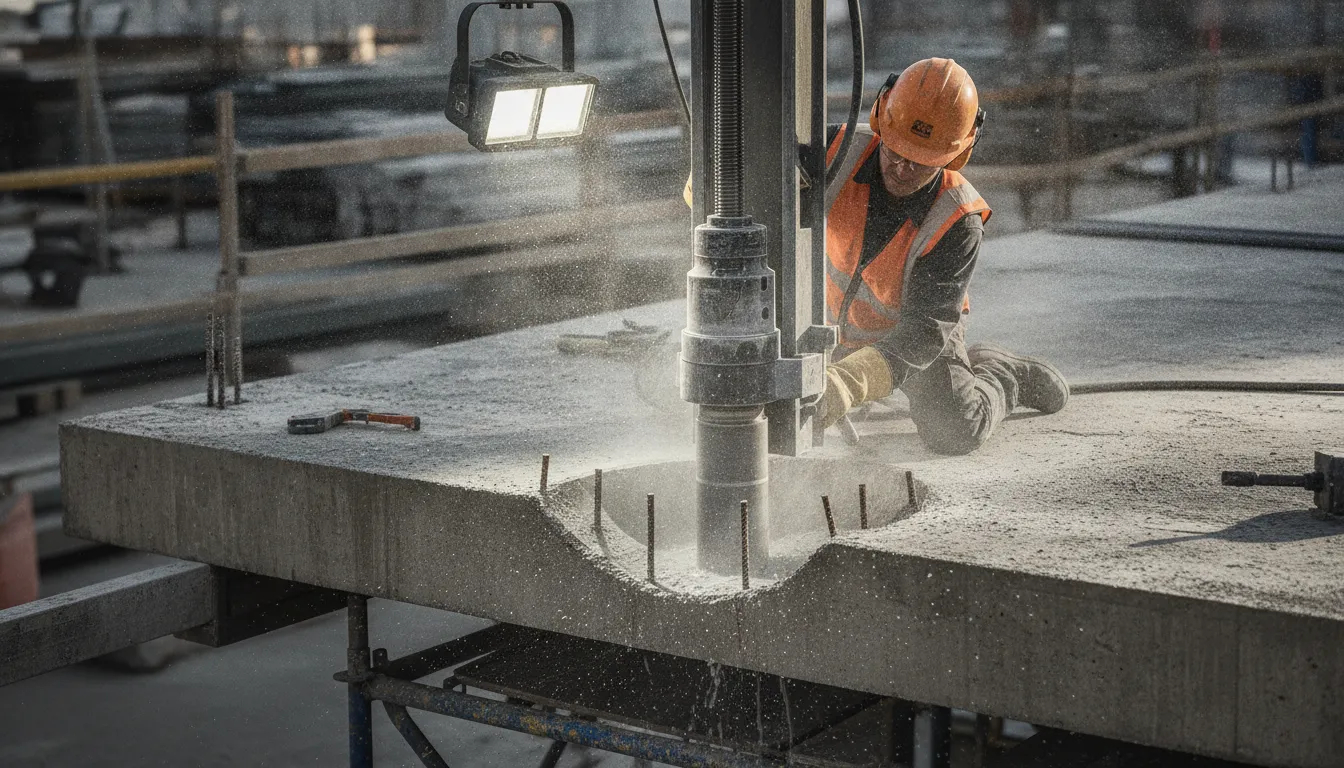
Read the material, set up the rig, and keep the process controlled from the first scoring pass to the final core lift. The steps below form a practical sequence you can adapt to your drill, bit diameter, and site conditions.
- Mark the hole and scan before drilling. Confirm the hole location, depth, and clearance requirements. Scan the slab for reinforcing steel, embedded conduit, and other hazards. Shift the layout when the planned opening conflicts with critical reinforcement or concealed services. Do not treat a scan as permission to ignore the structural plan.
- Secure the drill and set the starting speed. Anchor or brace the rig according to the equipment instructions. Confirm that the bit is properly mounted and runs true. Start with light feed pressure and a controlled rotation speed. A pilot or starter bit can help establish the opening without allowing the crown to walk.
- Cut the concrete with steady, moderate pressure. Keep the feed consistent instead of forcing the bit through the slab. Excessive pressure can stall the motor, bind the core, or overload individual segments. Let the diamonds cut the aggregate while the rig maintains alignment.
- Recognize the transition into steel. Rebar can produce a noticeable change in pitch, vibration, or feed resistance. Research on diamond core drilling identifies distinct acoustic and vibration signatures when the tool encounters steel reinforcement. Ease the feed as these signals appear. Keep the bit straight and allow the steel-cutting portion of the segments to work gradually.
- Maintain continuous coolant flow during wet drilling. Start water before the segments enter the slab. Keep enough flow to carry cutting debris from the kerf without flooding the work area. Watch the discharge for changes in color or volume. Reduced flow can raise segment temperature and allow slurry to pack around the bit.
- Pause between controlled passes. When the intersection is wide or cutting resistance rises, stop feeding and let the segments shed heat. Retract the bit slightly while maintaining safe control of the rig. Clear slurry from the hole when needed. Resume with light pressure rather than pushing through a hot, loaded crown.
- Check the core and hole after each breakthrough. As the bit approaches the underside of the slab, reduce feed pressure. Support the core and prevent a sudden drop that could damage the bit or surrounding concrete. Stop the machine before removing the core. Inspect the segments, bore wall, and reinforcement exposure before continuing the next hole.
Small changes in sound, vibration, water discharge, and feed resistance provide useful feedback. Treat those signals as reasons to slow down and inspect the setup, not as prompts to force production.
Core Recovery, Common Problems, and How to Fix Them
Clean core recovery starts before the bit reaches the bottom of the cut. Keep the drill stable, maintain steady pressure, and let water carry cuttings from the hole.
When wet drilling, slow the feed as the core nears breakthrough. This reduces breakout and helps preserve a usable sample. Keep water flowing, but avoid flooding the work area.
Recovering a Wet Core Without Breaking It
After completing the cut, release pressure and lift the barrel carefully. Do not yank the drill upward while the core remains attached. A controlled lift helps prevent the core from cracking against the barrel wall.
If the core stays in the hole, stop the drill and clear the annular space. Drilling dust and slurry can wedge between the core and the barrel. Clearing that material gives the core room to break free instead of forcing the equipment.
For a stubborn core, use a suitable extraction tool or controlled mechanical method. Avoid striking the barrel or twisting the drill. Those actions can damage the bit or fracture the sample.
What to Do When the Bit Binds on Rebar
A reinforced slab can feel smooth through concrete, then suddenly grab when segments contact steel. Changes in vibration and sound can help identify that transition. Research documents different signatures when tools strike concrete versus steel reinforcement.
When the bit shelves on rebar, reduce feed pressure immediately. Keep the drill aligned with the hole and allow the segments to work across the steel. Forcing the bit can cause binding, segment damage, or loss of control.
If rotation stalls or the barrel begins to twist, stop and lift. Clear the cut, inspect the setup, and confirm that the bit remains properly aligned. Never treat a stalled bit as a signal to apply more force.
Some drill head designs use hard-metal elements that project beyond the head circumference. These elements can help maintain the hole diameter when the head encounters reinforcement. Dust grooves can also support debris removal between the projecting elements. See the technical discussion in the diamond core bit patent reference.
Preventing Jams on the Next Hole
A sharp, correctly bonded bit cuts more consistently through changing materials. Segment bond selection should match the concrete and aggregate conditions. Soft bonds expose fresh diamond edges in hard, dense concrete, while harder bonds can extend life in abrasive material.
Inspect worn segments before the next cut. Check for glazing, uneven wear, damaged segments, and restricted water passages. Confirm that the barrel is straight and that the drilling system has enough stability for the diameter.
Keep the hole clear throughout the cut. Adequate water flow, clean dust grooves, and controlled feed pressure reduce the chance of slurry packing around the core. For broader equipment selection and jobsite preparation, review Diamond Tool Store's concrete tools and supplies guide.
Step up to the right diamond core bits for reinforced concrete before your next slab.
Frequently Asked Questions
Will a diamond core bit go through rebar?
Yes, a suitable diamond core bit can cut through reinforcing steel, but rebar increases heat, vibration, and segment wear. Use a bit designed for reinforced concrete, maintain steady pressure, and avoid forcing the drill when the crown meets steel. A hard-metal feature or steel-cutting segment design can help maintain the hole diameter during reinforcement strikes.
What are the best diamond core bits for concrete?
The best choice depends on concrete hardness, aggregate, reinforcement density, hole diameter, and whether the job allows water. For hard, dense concrete, a softer bond can expose fresh diamond more readily. For abrasive concrete, a harder bond may provide longer service life. Match the segment design and bond to the slab instead of choosing by diameter alone.
What drill bit is best for reinforced concrete?
For larger penetrations through a reinforced slab, use a diamond core bit rated for reinforced concrete with a compatible core drill and stable stand. Choose wet drilling when water control is practical, especially for sustained work. For dry work, use a dry-rated bit, dust extraction, and controlled feed pressure. Do not substitute a general masonry bit for core drilling.
Should you use a wet or dry core bit for reinforced concrete?
Wet drilling cools the bit and controls dust, making it useful for deeper holes and prolonged cutting. Dry drilling can be more convenient where slurry is unacceptable, but it requires dust control and careful heat management. Whichever method you choose, confirm the bit is rated for that operation and slow the feed when crossing reinforcement.
Ready to Choose the Right Core Bit?
Reinforced slabs demand a core bit matched to the concrete, reinforcement, drilling method, and recovery plan. The right combination can help you maintain control when the bit reaches rebar or mesh intersections.
Browse Diamond Tool Store's concrete core drill bits for reinforced slabs.