


Choosing CNC tooling for granite is less about finding a universal best bit and more about matching every cutting surface to the machine and operation. A tool that produces a clean profile on one setup may be the wrong choice when the spindle interface, holder, reach, coolant delivery, or available clearance changes.
To buy CNC granite tools with confidence, confirm the machine interface first, then match the tool category, profile, and bond to the granite operation and finish you need. Use the manufacturer's operating limits for spindle speed, feed, and coolant, and treat expected tool life as conditional on those settings, material, and shop practices.
That approach turns a product search into a repeatable buying decision. Start by auditing the machine connection and working envelope, because compatibility errors can undermine even a well-chosen profile or bond.
How Do You Match CNC Granite Tools to Your Machine?
Start with the machine, not the tool photograph. A compatible CNC granite tool must match the router's mechanical interface, available clearance, coolant arrangement, and programmed work envelope. Before ordering, record the machine make and model, spindle interface, holder standard, thread or shank specification, usable reach, and the type of granite operations you run. This short audit prevents a tool from appearing suitable in a catalog while failing at the spindle or workpiece.
Confirm the spindle, thread, shank, and holder
Check the spindle nose and tool-change system against the tool's required connection. Depending on the setup, that may mean a threaded tool, a straight shank, or a tool installed through a dedicated holder. Do not assume that a familiar thread size transfers between machines. Confirm the full specification in the machine manual, tooling documentation, or with the equipment supplier.
The holder is part of the cutting system, not an accessory to choose later. ISO40 holders are common examples in stone fabrication, including setups associated with Park Industries, Northwood, Brembana, and other major CNC brands. Your machine may require a different standard or a machine-specific adapter. A tooling program that includes quality holders, presetting, and the correct adapters can make tool changes more repeatable. But each component still needs to match the actual spindle and tool geometry.
For machine context, review the CNC machine collection and compare the listed equipment with your shop's configuration. If the holder or adapter is uncertain, pause the order and send the supplier the machine model and a photo or drawing of the spindle connection.
Check reach, clearance, coolant, and work envelope
Measure the reach needed to complete the operation without the holder, collet, or spindle contacting the slab, fixture, backsplash, or adjacent work. A tool that reaches the cutting area may still be too long for safe travel. While a short tool may leave an uncut section or force an unsuitable pass strategy. Check the tool diameter and profile against the narrowest feature, inside corner, and edge treatment in the program.
Next, verify coolant delivery and chip clearance. Confirm that the machine can direct coolant where the diamond tool engages the granite and that guards, hoses, and fixtures leave the flow path open. Follow the tool and machine manufacturer's limits for coolant use, spindle speed, feed, and pass depth. Research on granite CNC edge finishing found that feed rate and spindle speed affect both surface quality and cutting forces. So compatibility includes the operating range, not just the connection.
Finally, compare the tool's cutting envelope with the programmed travel in every axis. Standardized auxiliary equipment supports interoperability and consistent CNC performance across fabrication environments, a point emphasized by NIST's CNC equipment standardization research. If any interface, clearance, coolant, or travel detail remains unknown, confirm it before selecting the tool.
Which CNC Tools Are Used for Granite Fabrication?
Granite fabrication usually requires more than one CNC tool because cutting an opening, milling an edge, and producing a finished profile are different operations. The right choice depends on the tool path, the required shape, and the machine interface. A finger bit may be appropriate for edge milling, while a core bit is intended for circular cutting or drilling. Profile and stubbing wheels handle different stages of shaping and finishing, and the holder connects the selected tool to the machine accurately.
Match the tool to the operation
Finger bits are used for milling edges and shaping complex stone profiles. They are often considered when the job requires controlled material removal along an edge or contour. Core bits are designed for circular cutting and drilling holes, so they belong in an opening or bore-making workflow rather than an edge-profile pass. These are distinct jobs, even when both tools are used on the same granite workpiece.
Understand shaping and finishing tools
Profile wheels are selected when the edge needs a defined shape, such as a rounded or otherwise formed profile. Stubbing wheels are another category used in stone CNC tooling and may be part of a sequence that prepares or refines an edge before later finishing passes. The exact role depends on the profile, tool path, and process plan. Review the drawing and the intended finished edge before choosing a wheel solely by appearance.
Do not overlook the tool holder
A tool holder is not a minor accessory. It establishes how the cutting tool is presented to the spindle, so the holder must match the machine interface and the tool connection. Confirm the holder style, thread or shank details, working reach, and clearance with the machine documentation before ordering. If the holder is wrong, a technically suitable diamond tool may still be unusable or unsafe to run. For a broader selection of compatible options, review the CNC tooling collection.
| Tool type | Primary job | Confirm before ordering |
|---|---|---|
| Finger bit | Milling edges and shaping complex profiles | Machine interface, tool connection, profile, and working reach |
| Core bit | Circular cutting and drilling holes | Required hole size, machine interface, coolant process, and clearance |
| Profile wheel | Forming a specified edge shape | Finished profile, tool path, dimensions, and compatible holder |
| Stubbing wheel | Supporting an edge-shaping or preparation sequence | Its position in the process, material removal needs, and machine fit |
| Tool holder | Connecting and positioning the tool at the spindle | Spindle interface, thread or shank, reach, runout, and clearance |
Build the order around the complete operation, not just the tool name. Confirm what the tool must do, how it connects, and where it fits in the sequence before you buy CNC granite tools.
How Should You Choose a Granite Tool Profile and Bond?
Start with the edge or surface you need to produce, then choose the profile and bond around that job. A tool for rough material removal should not be specified the same way as one used for a final profile or finish pass. Before you buy CNC granite tools, identify the operation, the finished geometry, the granite thickness, and the cutting conditions your machine can support.
Match the profile to the edge and finish
Profile describes the working shape of the tool and the edge it creates. A straight edge, eased edge, ogee, bevel, sink opening, and other shaped detail each require a profile that matches the intended geometry. Confirm the drawing or template rather than relying on a product name alone. Two tools may both be described as profile tools while producing different edge shapes or requiring different finishing steps.
Also separate roughing from finishing. A roughing tool must remove material efficiently and leave enough stock for the next operation. A finishing profile must track the edge consistently and produce the surface quality the job requires. Check the tool diameter, working length, nose or edge shape, and clearance against the part. If the profile is close but not exact, ask whether the tool is intended to create the finished edge or only prepare it for another pass.
Use bond selection as a material and cutting decision
Bond is not a universal quality rating. It is part of the tool's cutting behavior and should be matched to the material, operation, and machine conditions. Ask the supplier how the recommended bond is intended to behave on your granite and whether it is suited to roughing, profiling, or finishing. A useful recommendation should account for the material being cut, slab thickness, coolant approach, feed rate, spindle speed, and the amount of engagement in the pass.
Those operating details matter because feed rate and spindle speed affect both granite surface quality and the forces placed on the cutting tool. The relationship is documented in machining research from the National Library of Medicine. That means a bond recommendation should be evaluated with the complete cutting setup, not treated as an isolated specification.
Questions to ask before the order arrives
- Is this profile for roughing, finishing, or both?
- Which granite type, thickness, and edge geometry was used to select the bond?
- What holder, thread, shank, reach, and machine interface must be confirmed?
- Which manufacturer-rated feed, spindle, coolant, and pass limits apply?
- What should we inspect when the tool arrives, including profile, dimensions, threads, and visible damage?
When the shipment arrives, compare the tool with the order and your drawing before loading it. Verify the profile, interface, dimensions, and condition, then record the tool identity and intended operation. This simple receiving check can catch a mismatch before it becomes a damaged edge, an interrupted job, or an incorrect tool-history record.
What Cutting Conditions Protect the Tool and Finish?
A compatible tool can still produce poor edges or wear too quickly when the cutting conditions are wrong. Spindle speed, feed rate, depth of cut, pass strategy, coolant, and chip clearance work together. The goal is to keep the abrasive tool cutting steadily without forcing it through the granite, overheating the bond, or allowing chips to recut against the finished edge. Research on CNC granite edge finishing confirms that feed rate and spindle speed affect both surface quality and the forces placed on the cutting tool. The published machining study is useful background when you evaluate supplier guidance and machine data.
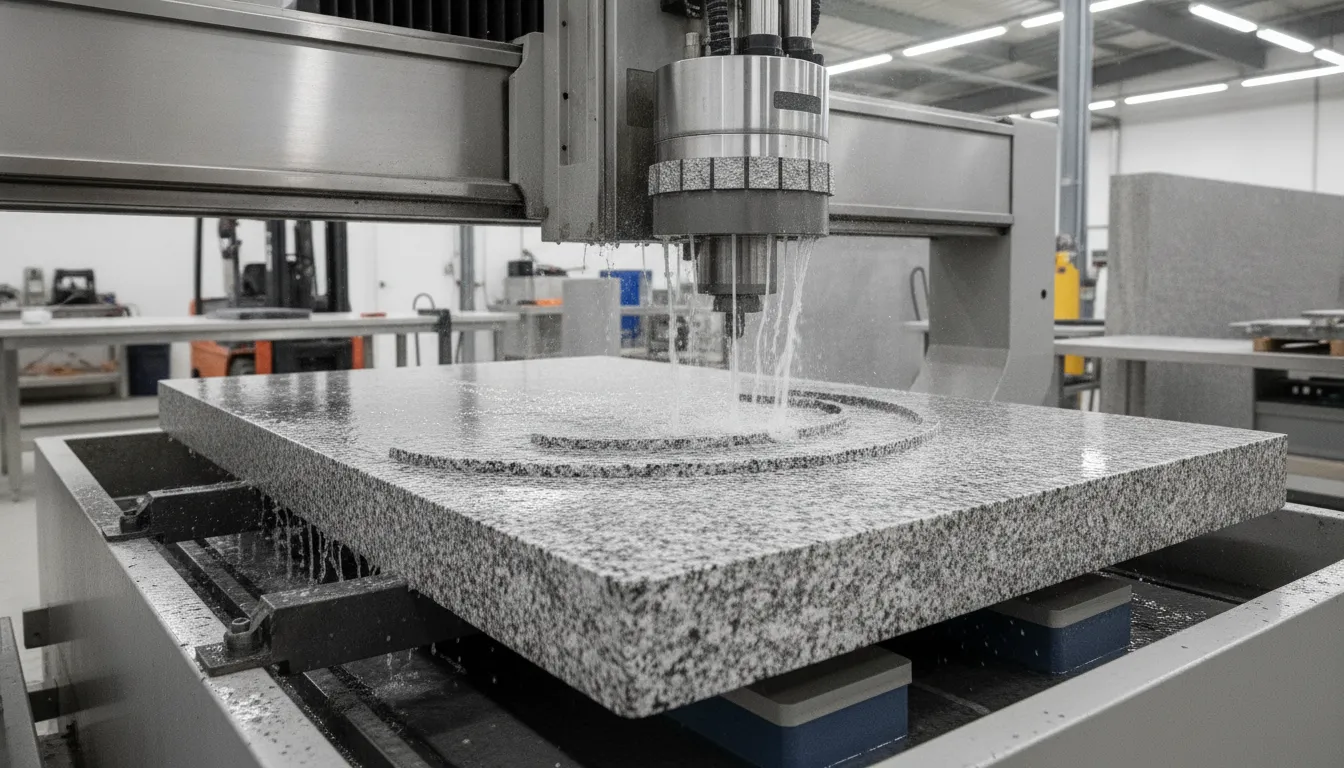
Do not copy a setting from another machine and assume it will transfer. The correct operating window depends on the tool design, granite thickness, required finish, spindle, holder, coolant delivery, and machine condition. Before you buy CNC granite tools, ask for manufacturer-rated operating data for the exact tool and operation. Treat general guidance as a starting point, not a substitute for the tool or machine manual.
- Confirm the machine and tool limits. Check the spindle's permitted speed range, holder or thread interface, tool diameter, working length, and clearance. Confirm that the selected tool is rated for the material and operation.
- Set spindle speed and feed as a pair. A speed change affects how much work each abrasive segment performs, while feed controls how quickly the tool moves through the stone. Adjust only within documented limits, then inspect the edge and listen for changes in cutting behavior.
- Use a conservative depth and pass strategy. Match the depth of each pass to the tool's documented application and the amount of material to remove. Multiple controlled passes are preferable to forcing an aggressive single pass when finish quality or tool load is uncertain.
- Keep coolant at the cutting zone. Use the coolant method specified for the tool and machine. Verify that flow reaches the contact area rather than being blocked by the workpiece, fixture, or guard.
- Clear chips continuously. Remove slurry and loose abrasive from the cut so debris does not interfere with the tool's engagement or recirculate across a finished surface. Keep filters, nozzles, and collection points maintained.
- Check runout before troubleshooting the tool. Inspect the holder, collet, adapter, and tool seating. Excessive runout can make one side of the tool work harder, leaving an uneven edge even when the programmed settings appear correct.
- Record the result and make one change at a time. Note the material, tool, pass plan, coolant condition, speed, feed, edge quality, and visible wear. This gives the shop a repeatable basis for refining settings within documented limits.
If the finish changes across otherwise identical parts, inspect setup condition before blaming the tool. A loose holder, restricted coolant path, poor chip evacuation, or inconsistent workholding can produce symptoms that look like a tooling problem. Documentation from the tool manufacturer should remain the final authority for safe limits and recommended conditions.
How Can You Estimate CNC Tool Life Before You Buy?
You cannot assign a guaranteed service life to a CNC granite tool from the product name alone. Tool life depends on the machine, holder, runout, granite characteristics, tool geometry, coolant delivery, feed, spindle speed, depth of cut, and the operator's maintenance routine. Treat life estimates as shop-specific planning data, not a promise from a catalog. Research on CNC granite edge finishing confirms that feed rate and spindle speed affect both surface quality and the forces placed on cutting tools. Review the machining study when you need the technical background.
What should you inspect during a test job?
Start with the finished edge, not just the number of parts completed. A tool may still remove material while producing a rougher edge, changing the profile, leaving more chipping, or requiring extra finishing work. Those changes are practical wear indicators. Inspect the edge after a known operation and compare it with an approved sample from the same material and program.
Watch for visible diamond exposure changes, glazing, loading, unusual heat, vibration, and rising spindle load. Loading can change how the tool cuts and may point to an unsuitable bond, inadequate coolant, poor chip clearance, or operating conditions outside the machine or tool documentation. Do not compensate for declining performance by automatically increasing feed or spindle speed. Recheck the setup first.
Runout deserves special attention. A tool that is not seated cleanly, a damaged holder, or contamination at the interface can make one part of the tool work harder than the rest. Confirm the holder, thread or shank, collet, and seating surfaces before judging the tool itself. Keep coolant directed at the cutting zone and maintain the system so flow is consistent throughout the job.
How can job logging improve your estimate?
Log each trial by tool identification, granite type and thickness, machine, holder, program, operation, coolant condition, and the approved parameter range. Record the number of edges or parts completed, inspection results, visible wear, dressing or cleaning performed, and the reason the tool was removed. Include setup notes when a tool is changed early. This creates a useful service-life range for your own workflow without pretending that every shop will achieve the same result.
When comparing options, calculate cost per completed job only after defining what counts as a completed job. Include usable output, scrap or rework, operator time for changes, dressing or maintenance, and downtime caused by poor finish. A lower purchase cost is not automatically the lower operating cost, and a longer-running tool is not useful if it compromises edge quality. Ask the supplier which machine interface, profile, bond, coolant approach, and operating limits the tool is intended to match, then validate those conditions with a controlled test.
For a practical starting point, review the CNC tooling collection and keep your test records with the tool specification before placing a larger order.
A CNC Granite Tool Buying Checklist
Before you buy CNC granite tools, turn the job into a specification your supplier can verify. A clear checklist prevents a mismatch between the drawing, the stone, the spindle, and the tool assembly. It also gives your shop a useful receiving record when the tooling arrives.
Confirm the job and machine interface
- Operation and drawing: Identify whether the tool will drill, mill an edge, open a sink cutout, shape a profile, or finish an existing form. Note the required radius, edge detail, tolerance, surface finish, and material thickness from the drawing.
- Granite or stone material: Name the material accurately, including whether the job involves granite, engineered stone, marble, or another surface. Hardness, thickness, reinforcement, and the required finish can change the appropriate tool choice.
- Machine interface: Record the CNC model, spindle connection, thread or shank specification, usable reach, clearance, coolant arrangement, and work envelope. Do not assume that a tool used successfully on one machine will transfer directly to another. Standardized auxiliary equipment supports interoperability and consistent performance across CNC environments.
- Holder and adapter: Confirm the holder style, collet or thread details, gauge length, and any machine-specific adapter. A total tooling program should account for the holder, precision presetting, and adapters, not just the diamond tool. ISO40 holders are common in many stone-fabrication shops, including setups associated with Park Industries, Northwood, and Brembana, but verify the exact interface on your machine.
- Profile and bond: Match the profile to the edge or shape in the drawing. Select the bond based on the stone, cutting behavior, and the balance between stock removal and finish. Ask the supplier what operation and material the tool is intended to handle rather than choosing by appearance alone.
- Coolant and chip clearance: Confirm the coolant delivery method and the shop's ability to keep the cutting zone clear. The tool must be compatible with the machine's operating conditions and maintenance routine.
- Approved parameters: Obtain the manufacturer-approved spindle speed, feed rate, depth or pass guidance, and any break-in requirements. Record those limits with the job setup. Feed rate and spindle speed affect granite surface quality and the forces placed on cutting tools, so avoid substituting a remembered setting from another tool.
- Backup tool: Decide whether a spare tool, holder, adapter, or preset assembly is needed to protect production when wear or damage appears. The backup should match the same verified interface and operation.
- Documentation at receiving: Check the tool against the purchase specification before it reaches the spindle. Record the tool identification, holder, measured length, runout check, intended operation, approved parameters, and inspection notes.
Use the checklist to close the purchasing loop
Send the drawing details and interface information together. A supplier can then distinguish a finger bit from a core bit, profile wheel, stubbing wheel, or holder assembly based on the actual work. Keep the completed record with the CNC setup so the next order starts from verified information instead of memory. If the machine itself is part of the decision, review the CNC machine collection alongside the tooling requirements.
Browse the CNC tooling collection for your next verified setup
When Should You Buy Tooling or Upgrade the CNC Setup?
A tooling review is warranted when the same machine-interface problems, setup delays, or finish inconsistencies keep returning. The right response may be a better-matched tool, a more controlled holder and presetting process, or a broader review of the CNC equipment itself. Do not treat every bottleneck as a reason to replace the machine. First identify whether the constraint follows the tool, the setup, the operator, or the machine.
Look for recurring setup and compatibility problems
Repeated adapters, uncertain thread or shank fit, inconsistent tool length, and manual workarounds are signals that the interface needs attention. Record the machine model, spindle connection, holder type, tool reach, clearance, and coolant arrangement for the operations that cause trouble. If each new order requires a fresh round of compatibility checks, standardize the information before you review the CNC machine collection.
A complete tooling program can include tool holders, precision presetting, and machine-specific adapters. These components can support repeatable setup, but they still must match the machine and operation. NIST likewise notes that standardizing auxiliary equipment is important for interoperability and consistent performance across different fabrication environments. Read the NIST CNC auxiliary-equipment research for additional context.
Separate a tooling bottleneck from a machine bottleneck
Review tooling first when the machine is sound but presetting, tool changes, runout, reach, or holder repeatability are slowing production. Review the CNC setup more broadly when the work envelope, spindle interface, coolant delivery, or control limitations prevent the operation from being configured correctly. A machine upgrade should solve a documented constraint, not simply add capacity without addressing the source of the problem.
Compare the current setup with the requirements of the work being scheduled. If a compatible holder or adapter removes the recurring issue, the next step may be a tooling change. If the machine cannot provide the required clearance, interface, or process control, evaluate CNC equipment options alongside tooling.
A practical decision summary
- Review tooling: the machine is capable, but fit, presetting, holders, adapters, or tool changes create repeatable problems.
- Review the CNC setup: machine limitations continue after the tooling interface is correctly specified.
- Verify before ordering: confirm the machine model, spindle and holder interface, operation, clearance, coolant requirements, and manufacturer limits.
Frequently Asked Questions
What types of CNC tools are essential for stone fabrication?
A practical starter set typically includes finger bits for milling edges and shaping profiles. Core bits for circular cutting and drilling, profile wheels for formed edges, stubbing wheels for stock removal, and compatible tool holders. The right mix depends on the operations your shop runs most often.
How do I choose the right CNC finger bit for granite?
Start with the machine interface, including the spindle, holder, and thread or shank requirement. Then confirm the granite thickness, edge or profile geometry, coolant setup, and the feed and spindle ranges permitted by the tool and machine documentation. Do not assume a finger bit fits every CNC platform.
What is the difference between CNC core bits and finger bits?
Core bits are intended for circular cutting and drilling holes. Finger bits are used to mill edges, openings, and shaped profiles. Selecting between them starts with the operation, not simply the tool diameter, because each tool transfers cutting forces and removes material differently.
What should I confirm about a CNC tool holder before ordering?
Confirm the holder standard, machine brand and model, tool connection, available reach, clearance, and presetting requirements. ISO40 holders are used with many stone-fabrication CNC systems, but the exact interface still needs verification against your machine documentation and current setup.
How can I compare expected tool life before buying?
Ask how the tool is intended to run with your material, operation, coolant, feed, spindle speed, and pass strategy. Track edge quality, wear, runout, loading, and completed jobs after installation. This gives you a shop-specific comparison instead of relying on an unsupported universal life estimate.
Ready to Choose Your CNC Granite Tooling?
Use the compatibility, profile, bond, and cutting-condition checks in this guide to narrow your options before ordering. Reviewing the tooling collection can help you compare solutions for your machine setup and stone-fabrication work.
Browse CNC tooling for granite and stone fabrication at Diamond Tool Store