


Concrete drilling is not a wet-versus-dry preference in isolation. The right choice depends on where the hole is going, how much water the site can contain, and how the bit, machine, concrete, and operator work together.
For wet vs dry diamond core bits for concrete, wet drilling generally offers stronger heat control and carries slurry from the cutting zone. Dry drilling avoids water but demands effective dust extraction and deliberate heat management. Neither method fits every job, and wet-rated and dry-rated tooling should not be treated as interchangeable.
Before choosing a bit, match the drilling method to the concrete hardness, aggregate, reinforcement, hole diameter, drilling orientation, and required finish. Segment geometry and bond matter as much as the presence or absence of water. Those details influence cutting behavior and wear. Start by separating the two methods at the tool and jobsite level, then use that comparison to select the right concrete core drill bits.
What is the difference between wet and dry diamond core bits for concrete?
The practical difference between wet vs dry diamond core bits for concrete is how the tool manages heat and drilling debris. Wet core drilling introduces water at the cutting zone. Dry core drilling operates without water and depends on bit design, machine setup, operator technique, and dust control to manage the cut.
Shop concrete core drill bits for your next job
How wet core drilling works
Water cools the diamond segments and helps carry concrete slurry away from the hole. That cooling can support steadier cutting when drilling larger diameters, dense concrete, or reinforced sections. Water also suppresses airborne dust at the point of contact.
Wet drilling is not simply a matter of adding water to any bit. The core bit and drilling machine must be rated for wet use. The job also needs a plan for water supply, slurry collection, drainage, and cleanup. Too much water can obscure the cut and spread slurry across a finished surface. Keep the water path controlled rather than allowing slurry to run through the work area.
How dry core drilling works
Dry drilling avoids water, which can make it practical where water access is limited, cleanup must be minimized, or finished materials could be damaged by moisture. Dry-rated diamond core bits are designed for that operating condition. They still generate heat and airborne concrete dust, so use compatible extraction equipment and follow the tool maker's instructions for pauses, pressure, and rotation.
A dry bit should not be treated as a wet bit with the water turned off. Dry and wet tooling can use different segment geometry, bond characteristics, and slotting. Machine power, hole diameter, drilling orientation, concrete hardness, aggregate, and reinforcement also affect the result. For broader application guidance, review these core drill bits for concrete.
When is wet core drilling the better choice?
Wet core drilling is usually the stronger option when a concrete job involves repeated holes, extended cutting time, dense material, or reinforcement. Water reaches the cutting zone as the bit turns. It helps manage heat and carry slurry away from the cut. That can keep the operation more consistent than dry drilling when the machine, bit, and work area are set up for wet use.
Choose wet drilling for sustained production
On production work, stopping frequently to let a dry bit cool can interrupt the drilling sequence. A properly matched wet system supports longer, steadier operation because water removes heat as material is cut. This can be useful for multiple penetrations, larger diameters, deeper holes, or hard concrete where the bit remains engaged for longer periods.
Reinforcement is another reason to consider wet drilling. Encountering steel can increase cutting resistance and heat. Water helps control the thermal load while diamond segments work through the concrete and reinforcement. It does not replace the need for the correct bit, machine power, feed pressure, or operator technique.
Plan water containment before the first hole
Wet drilling is only an advantage when the site can handle water responsibly. Poor containment creates slurry that can stain or damage finished surfaces, obscure the cut, and create a cleanup problem. Use suitable collection methods, protect nearby materials, and keep water away from electrical hazards.
If the work area cannot safely accommodate water, dry-rated tooling with effective dust control may be the better choice. The best wet setup is a complete system: a compatible machine and bit, controlled water flow, stable drilling technique, and a plan for collecting slurry.
When should you choose dry core drilling?
Choose dry core drilling when water is difficult to supply, cleanup would disrupt the job. Or the work is taking place inside a finished area where slurry could stain surfaces or migrate into walls and floors. It can also make sense for a portable setup. The tradeoff is that dry drilling transfers more heat and dust-management responsibility to the operator.
Where dry drilling fits the jobsite
Dry drilling is useful in occupied interiors, retrofit work, and locations without a practical water source. It avoids the need to contain and remove slurry around finished flooring, equipment, occupied rooms, or sensitive electrical areas. It may also be preferable when moving a water tank, pump, hoses, and containment materials would outweigh the benefit of wet cutting.
Portability does not remove the need for planning. Confirm the hole diameter, drilling orientation, concrete condition, machine power, and expected reinforcement before selecting a bit. Review the available concrete core drill bits by application and verify that the specific bit is rated for dry use.
Dust extraction and heat control are essential
Dry drilling produces airborne concrete dust as well as heat at the cutting zone. Use a suitable dust-extraction setup and keep connections secure. Position the work so dust is not pulled through occupied spaces. Extraction helps control the work area, but it does not make dust exposure harmless. Wear protective equipment specified for the operation and follow the machine and tool instructions.
Because water is not carrying heat away, do not force the bit through the cut with excessive pressure. Keep the bit moving as the tool maker directs and pause at the intervals specified by the maker. If the bit begins cutting poorly or heat builds unusually fast, stop and reassess the tooling, extraction, pressure, and concrete conditions.
How do segment types and concrete conditions affect bit life?
Bit life is shaped by the match between the core bit and the concrete, not by segment style alone. Segmented bits generally provide open gullets for debris and slurry. Continuous-rim designs favor a smoother cut. Turbo-style segments add relief for cutting and debris clearance. The right choice depends on the concrete, hole diameter, machine, drilling angle, and whether the setup is wet or dry.
| Factor | What it changes | What to verify |
|---|---|---|
| Segment style | Segmented, continuous-rim, and turbo geometries balance debris clearance, cut smoothness, and cutting response differently. | Choose a design rated for the concrete application and required finish. |
| Bond | The bond controls how readily worn diamond is released and how fresh diamond is exposed. | Match bond hardness to the concrete and aggregate. |
| Concrete and aggregate | Hard concrete and abrasive aggregate can wear a segment differently. Mixed materials may change cutting behavior through one hole. | Identify the concrete condition and aggregate before selecting the bit. |
| Rebar | Steel reinforcement adds cutting demand and can increase heat and wear during the pass. | Confirm the bit and machine suit reinforced concrete, then use controlled pressure. |
| Diameter and orientation | Larger holes and horizontal or overhead work change load, stability, cooling, and debris removal. | Check machine capacity, alignment, and the water or dust-control method. |
| Operator technique | Excessive pressure, binding, poor alignment, or forcing a stalled bit creates heat and segment stress. | Keep the bit aligned, use the maker's recommended feed, and let it cut. |
Wet drilling can improve heat management and carry slurry from the cutting zone. It requires a bit and machine rated for wet use. Dry drilling avoids water but produces heat and airborne dust. Dry-rated tooling, extraction, and the manufacturer's pause or cooling guidance matter.
For a closer look at geometry, review these diamond core bit segment types. Select the bond and segment configuration around the actual concrete conditions. Protect bit life with steady alignment, appropriate pressure, and effective heat and debris control.
How should you choose between wet and dry concrete core bits?
Choose the drilling method from job conditions, not from the bit label alone. Wet and dry tooling are designed differently. The right choice depends on the hole, concrete, machine, water controls, and finish requirements.
- Confirm the hole and concrete. Start with the hole diameter, depth, orientation, and required finish. Identify hardness, aggregate, and likely reinforcement. A small hole through ordinary concrete creates different demands from a larger opening through reinforced structural concrete.
- Check whether water can be used and contained. Wet drilling can manage heat and carry slurry away. Confirm that water can reach the cut without damage, electrical exposure, uncontrolled runoff, or difficult cleanup. If the space is finished or water access is restricted, dry drilling may be more practical.
- Match the bit to the machine. Verify wet or dry capability, power, speed range, mounting system, and operating instructions. Segment geometry, bond, slotting, diameter, and machine power all influence performance. Wet and dry are not interchangeable settings.
- Plan dust or slurry control. Wet work needs a way to supply, contain, and remove water and slurry. Dry work produces airborne dust and heat, so use suitable dust extraction and dry-rated tooling. Treat cleanup as part of setup, not an afterthought.
- Run a controlled test and monitor wear. Observe cutting behavior, heat, dust or slurry, vibration, and segment condition. Follow the maker's guidance for pressure, movement, and pauses. Adjust the setup only after identifying the cause of poor cutting.
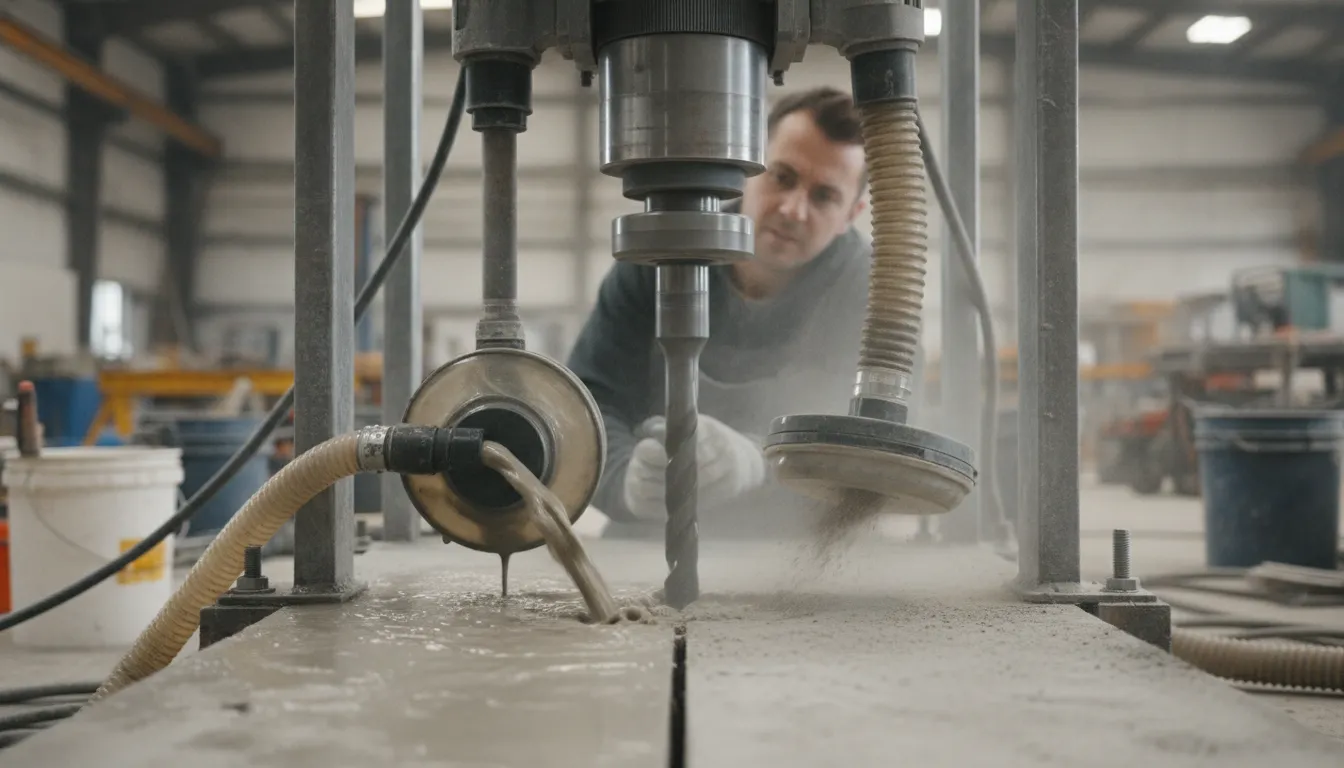
The best choice fits the complete operation: material, hole, equipment, water or dust controls, and the condition of the finished area.
Shop concrete core drill bits for your next concrete drilling application.
Frequently Asked Questions
Are wet or dry core bits better for drilling concrete?
Neither is best for every job. Wet core bits are usually stronger when cooling, dust control, and consistent cutting matter. Dry core bits fit sites where water access, slurry cleanup, or water damage is a concern. Concrete hardness, hole diameter, reinforcement, machine power, and bit design should also guide the decision.
When should you use a dry core bit for concrete?
Choose a dry-rated bit when water cannot be used safely or practically, such as in a finished interior or a location without a reliable supply. Pair it with effective dust extraction, follow duty-cycle guidance, and manage heat by keeping the bit moving as specified.
Does water usage impact diamond core bit lifespan?
Proper water delivery can help control heat and maintain consistent cutting, which may support longer bit life. It does not eliminate wear. Aggregate, concrete hardness, rebar, diameter, pressure, bond, machine setup, and operator technique all affect service life.
Can I use any diamond core bit for wet or dry drilling?
No. Wet and dry bits are not interchangeable labels. Confirm that the bit, segment design, bond, machine, and drilling method are rated for the intended use. Unsuitable tooling can cause poor cutting, excessive heat, premature wear, or equipment damage.
What are the main benefits of wet concrete core drilling?
Water carries slurry away from the cutting zone and helps remove heat during drilling. Wet drilling can also reduce airborne dust and support a steadier cut. Plan containment first because uncontrolled water can obscure the hole, spread slurry, or damage nearby finished surfaces.
Get Started With the Right Concrete Core Bit
The right wet or dry bit depends on your concrete, drilling environment, machine, and cooling or dust-control setup. Review the available options before ordering so the segment design and drilling method fit the work ahead.