Granite edge work is unforgiving: the profile has to match the finished design. The tooling has to suit the stone, and the router or CNC setup has to accept the attachment. Choosing by appearance alone can leave a fabricator with the wrong edge geometry, poor cooling, or an incompatible bit.
The best router bits for granite are diamond tooling selected for the stone, edge profile, bit diameter, attachment, cooling method, and machine requirements. Start with the profile and material, then confirm the holder and manufacturer RPM guidance before cutting.
Shop stone router bits for professional granite fabrication
Diamond router bits are built to define profiles and polish hard surfaces, but different jobs call for different shapes and finishing stages. The right choice becomes clearer when you understand what separates granite-suitable tooling from a general-purpose router bit.
What Makes the Best Router Bits for Granite Different?
Granite is hard, dense, and unforgiving of mismatched tooling. A general-purpose woodworking bit is not designed to shape and refine a stone edge. Diamond router bits are purpose-built for hard surfaces, using a diamond cutting surface to define an edge profile and prepare it for polishing. That makes them the right starting point when the job involves granite countertop edges, sink openings, vanity tops, or other fabricated stone components. Diamond router bits are commonly used to profile and polish granite and other hard surfaces.
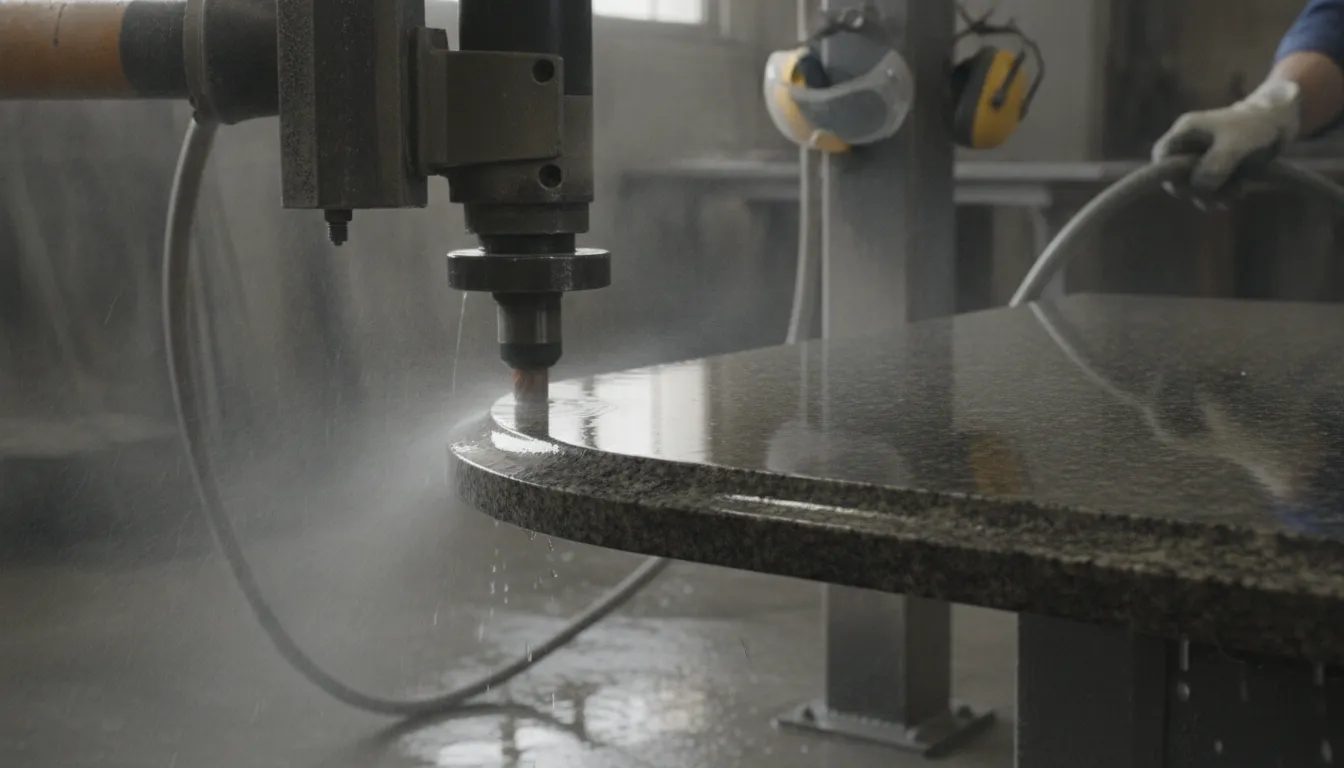
The best router bits for granite are not simply the most aggressive or the most expensive. They are the bits that match the material, edge shape, machine, and stage of work. Start by identifying the stone you are cutting. Granite, marble, engineered stone, and concrete do not necessarily place the same demands on a tool. The material match should be clear in the product specifications, rather than assumed from a similar-looking bit. Diamond Tool Store's stone router bits collection is the appropriate category to review when comparing tooling for stone fabrication.
Match the bit to the edge profile and task
Next, define the result you need. An edge-profiling bit creates a particular geometry, so the profile must correspond to the finished edge and the countertop design. A tool intended for shaping a rounded edge is not interchangeable with one intended for a decorative profile. Also separate material removal from finishing. A coarse tool may be appropriate for establishing the shape, while a finer tool or later polishing step is used to refine the surface. Trying to force one bit to perform every stage can produce an inconsistent edge and unnecessary wear.
Check the complete workflow before buying
Compatibility extends beyond the cutting surface. Confirm the shank or holder matches the router, pneumatic tool, or CNC spindle. Check the machine's operating requirements and follow the bit manufacturer's RPM guidance for the specific tool and material. The work setup also matters. Granite profiling commonly uses water to cool the stone and tool and to reduce dust. So make sure the tool and machine are suitable for the intended wet or dry process. Follow the manufacturer's instructions for cooling, guarding, feed technique, and personal protective equipment.
A good selection process therefore moves in order: material first, finished profile second, removal or finishing task third, and machine fit and operating method last. That approach keeps the purchase tied to the actual fabrication job instead of relying on a generic claim that one router bit works for every stone.
Which Granite Edge Profile Should You Choose?
The edge profile determines the finished look, the amount of stone removed, and how the countertop feels in daily use. Choose the profile from the job requirements first, then select a diamond router bit that matches the geometry. A profile bit is not a substitute for a general grinding or polishing tool, so confirm that the tooling sequence covers shaping, smoothing, and final finishing.
| Profile | Best fit | What to consider |
|---|---|---|
| Demi-radius | Countertops needing a rounded upper edge with a clean, understated transition | Useful when the design calls for softened edges without the fuller appearance of a bullnose. Check the bit geometry against the slab thickness and desired reveal. |
| Ogee | Decorative residential countertops, islands, and fabrication work with a more traditional edge | The shaped contour has multiple transitions, making alignment and a consistent pass sequence especially important. Use a profile tool made for the intended edge rather than trying to approximate it with straight tooling. |
| Pencil or crescent | Modern, minimal countertop edges and applications where a modest radius is preferred | A smaller rounded edge can provide a finished feel while preserving a simple visual line. Verify the radius and bearing or guide arrangement before cutting the workpiece. |
| Full bullnose | Countertops requiring a continuously rounded edge across the visible thickness | This profile removes and shapes more material than a lightly eased edge. Confirm that the slab thickness, machine travel, and finishing sequence can support the complete radius. |
Match the profile to the fabrication scenario
For a straightforward countertop with a restrained appearance, a pencil or crescent profile is often the practical starting point. Demi-radius edges suit jobs that need more visual softness while retaining a controlled, relatively simple contour. When the edge is a prominent design feature, an ogee can create the decorative shape the customer expects, but it demands careful setup and consistent tool movement.
A full bullnose makes sense when the design calls for a rounded treatment over the exposed edge, especially on a thicker countertop. It is less suitable when the project requires a narrow reveal or a crisp transition. In every case, compare the profile drawing or product dimensions with the actual granite thickness before beginning. The Dupont granite profile bit is one example of a profile-specific option for granite and marble edge work.
The best router bits for granite are the ones that match the selected edge, the stone, and the router or CNC setup. Do not choose by profile name alone. Confirm the tool's working dimensions, mounting format, recommended operating guidance, and compatibility with the rest of the shop's shaping and polishing process.
How Do Diameter and Position Affect the Cut?
Diameter and position determine how a router bit approaches the granite edge. Choose them around the finished edge geometry, the amount of material that must be removed, and the sequence your tooling requires. The goal is not to find the largest or most aggressive bit. It is to build a controlled path from rough shaping to a surface ready for finer work.
Choose diameter around the edge geometry
The bit diameter should suit the profile you are trying to create. A tool that is too small for the intended curve may leave an incomplete or uneven profile. A tool that is too large may not fit the edge detail you need, particularly when the design includes a tight transition, a reveal, or a partial radius.
Start by identifying the finished shape in the job specification, then compare that shape with the bit's working geometry and the machine or router's holder requirements. Diameter is only one part of the decision. The cutting edge, profile, shank, and available clearance must all work together. If the job calls for a specific edge style. Verify that the bit is designed to form that style instead of assuming a general-purpose granite bit will reproduce it.
This is especially important when moving between countertop edges, small exposed corners, sink openings, and other areas where access changes. A buyer selecting the stone router bits should match each tool to the actual edge operation, not just to the material name.
Use the position sequence from coarse to fine
Profile systems commonly use numbered positions to organize the work. Position 1 is the coarse stage for initial shaping. Later positions use finer tooling to smooth the formed edge and prepare it for subsequent finishing or polishing. This coarse-to-fine sequence keeps bulk removal separate from surface refinement.
That sequence affects purchasing decisions. If the edge is still being established, a finishing-position bit will not replace the initial shaping tool. Conversely, using only a coarse position when the edge needs refinement can leave more finishing work and may compromise the consistency of the profile. Plan the complete set before buying, including the position needed for material removal and the finer positions needed to refine the same geometry.
Keep the positions in their intended order, make sure each bit matches the profile system, and follow the bit manufacturer's operating instructions. The best router bits for granite are the ones whose diameter, profile. And position align with the edge you need to produce and the next operation in the workflow.
What Attachment, Cooling, and Dust Controls Matter?
A well-shaped profile depends on more than choosing one of the best router bits for granite. The bit must seat correctly in the machine, receive adequate cooling, and be used with controls that limit airborne dust and accidental contact. Set up the work area before the first pass, and follow the tool, machine, and stone manufacturer's instructions for the specific equipment.
- Confirm the shank, holder, and machine fit. Check the bit's shank diameter against the router collet or CNC holder. The shank should be clean and fully seated to the equipment manufacturer's specified depth, with no chips, damage, or visible runout. On a CNC, verify that the holder, collet, and tool-change system are compatible. A profile bit that does not match the attachment cannot cut consistently, regardless of its abrasive quality.
- Inspect the bit and granite before mounting. Look for damaged segments, cracks, loose components, or wear that could affect the profile. Check the granite for a secure support surface and a clear routing path. Remove objects that could catch the tool or interrupt the pass. This is also the point to confirm that the profile matches the edge design and that the tooling is intended for granite rather than assuming a general-purpose bit will suit every stone.
- Plan water delivery before cutting. Water helps cool both the granite and the tool while reducing dust during shaping and profiling. The source should reach the cutting area consistently without creating an electrical or slip hazard. Protect nearby equipment and route hoses so they cannot contact the rotating tool or become a trip point. Do not improvise a water setup that conflicts with the router or CNC manufacturer's instructions.
- Control dust and protect the operator. Use wet cutting where the equipment and work area allow it, along with suitable local extraction or other dust-control measures. Wear the PPE specified for the operation, including appropriate eye protection, hearing protection, and respiratory protection when required by the task and safety guidance. Keep bystanders away from spray, slurry, and the tool path. Dry routing is not universally safe, so never treat it as the default without confirming the machine, bit, material, and workplace controls.
- Make a final pre-pass check. Confirm the attachment is locked, the workpiece is stable, water or dust controls are operating, and the cutting path is clear. Start with the manufacturer's guidance for the tool and machine rather than inventing settings. Stop if the bit chatters, overheats, binds, sheds material unexpectedly, or produces an irregular profile. Inspect the edge between passes and clean slurry or dust so wear and surface quality remain visible.
This setup separates a controlled profiling operation from a rushed cut. Once fit, cooling, dust management, and inspection are in place. The bit can do its intended job: remove material predictably while shaping the granite edge for the next finishing stage.
How Do You Match a Bit to the Router or CNC Machine?
A profile can be correct for the edge and still be wrong for the machine. Before choosing among the best router bits for granite, confirm that the bit, tool, and workholding setup are designed to operate together. The goal is controlled contact with the stone, adequate clearance, and a feed and speed range supported by the equipment manufacturer.
Handheld routers and edge tools
For a handheld electric or pneumatic router, start with the shank diameter and the collet or chuck. The shank must match the tool exactly and seat fully without bottoming out. Do not assume that a bit will fit because its profile looks right. Check the tool's rated capacity, the collet condition, and the available clearance around the motor housing, guide, stone, and clamps.
Also confirm how the tool handles cooling and debris. Wet profiling may require a tool and setup rated for that environment, while dry work requires an appropriate dust-control plan. Water is commonly used during granite shaping to cool both the stone and tooling and to reduce dust, but the machine manufacturer's instructions control what is acceptable. Keep hoses, electrical connections, and the work area arranged so cooling does not create a separate hazard.
CNC spindles, holders, and tool changes
A CNC setup adds more points to verify. Match the bit to the spindle holder, collet system, and tool-change procedure. Confirm the holder's supported shank and the machine's usable tool length. Then check the programmed clearance above the workpiece, around clamps, and along the full travel path. A bit that fits the holder can still collide with fixtures if its projection or profile is not accounted for.
Coolant delivery is equally important. Verify whether the machine uses flood coolant, directed spray, or another method, and make sure the flow reaches the cutting area without interfering with sensors or workholding. For dry operations, confirm dust extraction and enclosure requirements before loading the tool.
Use the machine and bit guidance together
Record the bit position, holder, tool length, and intended operation in the shop's setup notes. Follow the manufacturer's recommended RPM range for the specific bit and material rather than copying a setting from another tool. Granite, the profile geometry, tool diameter, contact area, and cooling method all affect the appropriate operating window. Match the bit to the primary material and use a tooling sequence that fits the job instead of treating one router bit as universal.
For automated work, review our CNC granite tooling selection guide alongside the machine manual. For handheld and general stone-fabrication setups, compare the available diamond tools for stone fabrication and verify each product's fit before ordering.
Granite Router-Bit Buying Checklist for Fabricators
Before ordering a bit, define the edge you need to produce and the work the tool must perform. A profiling bit is not automatically the right choice for stock removal, polishing preparation, or a detailed decorative edge. Start with the finished profile, slab thickness, access to the edge, and the amount of material that must be removed.
Confirm the profile and dimensions
Use the product listing to verify the profile name, working diameter, overall dimensions, and mounting details. Common granite edge families include demi-radius, ogee, pencil or crescent, and full bullnose. Compare the listed geometry with your template or finished-edge specification rather than choosing by appearance alone. If the job calls for a Dupont-style edge, review the Dupont granite profile bit listing and confirm that its stated dimensions match the workpiece and tooling setup.
Match the bit to the material and machine
- Material: Confirm that the bit is intended for granite and the specific application. Do not assume a tool selected for one stone will produce the same result on every material.
- Machine: Check shank size, holder or collet requirements, available clearance, and whether the bit is intended for a handheld router, wet polisher, or CNC equipment. Follow the bit and machine manufacturer's instructions.
- Speed: Verify the manufacturer's recommended RPM range for the bit and material before cutting. Machine capability does not replace the tool's operating guidance.
- Cooling: Decide how coolant will reach the cutting area. Water can cool the granite and tool while reducing dust, but the setup must be appropriate for the machine, electrical controls, and jobsite.
Plan the complete finishing sequence
Check whether the selected bit is a coarse shaping tool, a profiling step, or part of a finer finishing sequence. Initial shaping and final edge refinement are different operations, so confirm which positions or grits are included and what follows them. This prevents buying a profile that matches the shape but leaves the shop without the tooling needed to prepare the edge for finishing.
This checklist keeps the decision focused on granite router-bit selection instead of repeating a broad CNC tooling overview. For machine-specific programming and broader tooling decisions, use the separate CNC granite tooling selection guide. For profile-focused work, compare the available stone router bits against the job specification, machine fit, cooling approach, and finishing plan.
Compare granite router-bit options before you order
Frequently Asked Questions
Is there a router bit for granite?
Yes. Diamond router bits are designed to shape, profile, and help polish hard surfaces such as granite. Choose the profile and tooling sequence for the edge you are making, then confirm that the bit matches the granite and router or CNC setup.
What router bit do you use for a countertop?
Choose the bit by the finished edge profile, not simply by the fact that the work is a countertop. Demi-radius, ogee, pencil or crescent, and full-bullnose profiles are common options. Match the bit diameter and position to the edge geometry and the stage of work.
Can I cut granite with a router?
A suitable diamond router bit can profile and shape a granite edge, but the router, holder, bit, and cooling method must be compatible. Use the manufacturer instructions for the specific tool and machine. And use water where the setup calls for wet work to cool the tool, cool the granite, and reduce dust.
What drill bits are best for granite?
Drilling and edge profiling require different tools. For holes, select a diamond tool specifically intended for granite drilling and verify its fit with the machine. For countertop edges, use a diamond router bit matched to the required profile instead of substituting a general-purpose drill bit.
Ready to Choose Your Granite Router Bits?
The right profile, diameter, cooling setup, and machine fit can make edge work more predictable and help you avoid buying a bit that does not suit your workflow. Review the available options by application, then confirm shank, attachment, and operating requirements against your equipment.
Shop Diamond Tool Store's stone router bits and related diamond tools for your granite fabrication workflow.