


Browse Diamond Tool Store's bridge saw and CNC machine collection to compare equipment built for stone fabrication workflows.
The bridge saw is the primary workhorse tool in a modern stone shop, built to turn large slabs of granite or marble into precise countertops and vanity tops. While basic 3-axis models make straight cuts, complex machines handle miter angles with ease, and automatic machines can reach speeds of 120 lineal feet per hour very easily. According to the Crown Stone USA blog, this high speed is twelve times faster than hand work and lets your team focus on finishing stone edges much better. Knowing your shop's daily output and your long-term growth goals is the first step to picking the right saw for your very own growing stone business today.
What is a bridge saw?
A bridge saw is a large, fixed tool used to cut heavy slabs of stone like granite or marble. It sits on a "bridge" or beam that moves back and forth over a work table. This tool is the workhorse of most stone shops because it makes long, straight cuts with great speed. It uses a bridge saw blade made with diamond to slice through hard rock.
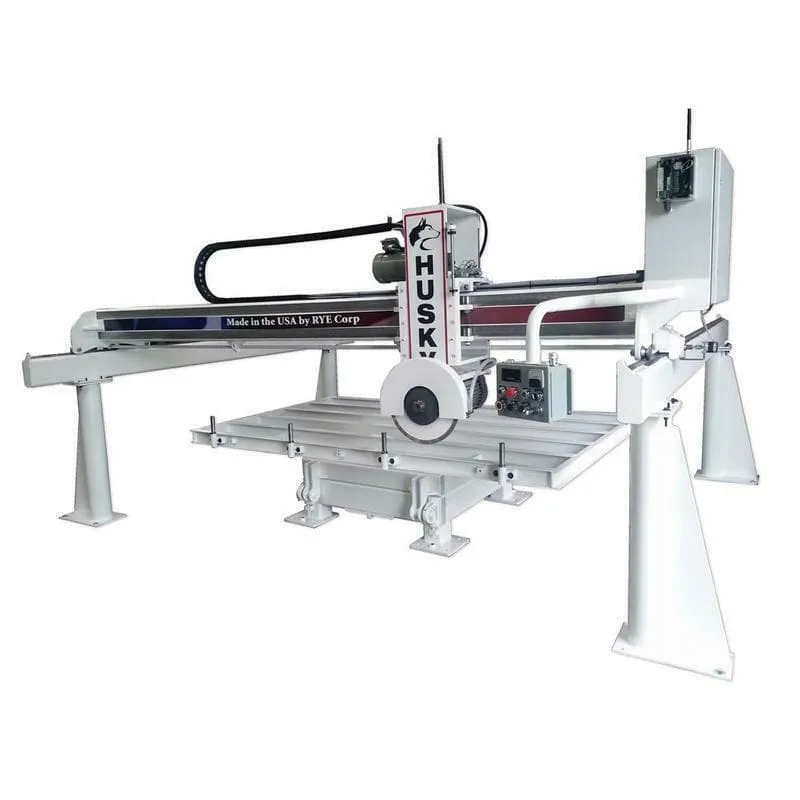
The main parts of the tool
Most bridge saws share the same core parts to handle heavy work. A strong bridge beam spans the width of the tool and moves along rails. On this beam, a carriage holds the motor and the blade. This setup lets the blade move in three ways: across the slab, along the bridge, and up or down. Large gantry bridge saw systems can handle the largest slabs in a busy shop.
Power is also a big part of how these tools work. Many shops use a 15 hp motor to turn the blade fast enough to cut through quartz or stone. The blades are often 14 or 16 inches wide. A 16 inch blade can cut stone up to 3-3/4 inches thick. This power and size help shops break down big slabs into smaller pieces for counters or floors.
Common uses in stone shops
Stone workers use bridge saws for many tasks. The most common job is slab breakdown. This means taking a big, raw piece of stone and cutting it into the right size for a kitchen or bathroom. Since these saws are so large and stable, they make very straight cuts. This is much better than using a hand tool that might slip or shake.
These tools also help with safety. Most shops use wet cutting ways to keep dust out of the air. This is vital because stone dust has silica, which can hurt a person's lungs. Using water while cutting is a key way to stay safe on the job, as shown in safety reports for stone shops. This water also keeps the diamond blade cool so it lasts longer.
Bridge saws vs hand saws
You might wonder how a bridge saw is not like a small rail saw. A rail saw is small and you can move it to the stone. A bridge saw is the other way: you bring the stone to the tool. While rail saws cost less, they lack the power of a full shop saw. Manual bridge saw options give a shop much more control and better speed than hand tools.
A bridge saw is built to last for many years in a high use shop. It has parts that need grease and care to stay in top shape. If a tool breaks down, it can cost a shop a lot of money in lost time. That is why choosing a tool with a strong frame and good parts is so key for any stone shop.
Bridge saw vs. CNC machine: what changes?
Choosing between a standard bridge saw and a CNC machine depends on your shop goals and daily work. Manual saws are great for simple jobs, while CNC units handle complex stone shapes. Both tools use a manual bridge saw options for straight cuts on granite or marble slabs. Picking the right machine helps your shop stay on time and on budget.
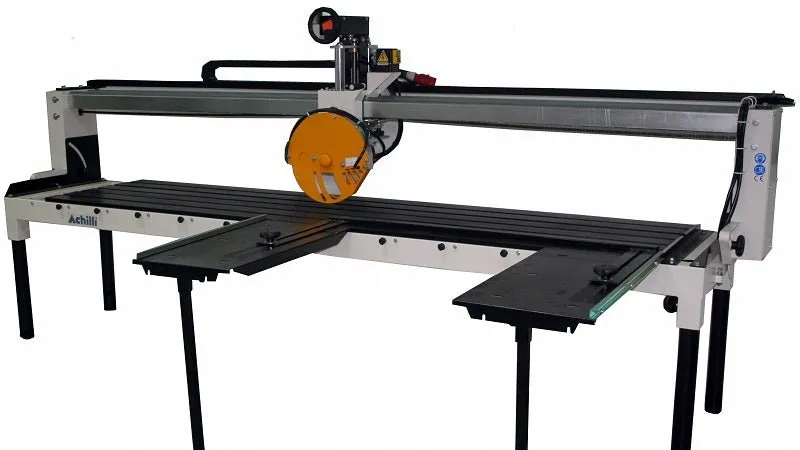
Manual bridge saws for simple cuts
A basic bridge saw uses a diamond blade to make long, straight cuts. Most shops use a 14-inch or 16-inch blade to cut through stone slabs. A 16-inch blade can reach depths of about 3-3/4 inches. These machines often have manual turning to move the stone every 45 degrees. A skilled person must guide the saw for every cut to ensure the lines are straight and clean.
Manual saws are slower but cost less to start. A worker can usually cut about 10 lineal feet of stone per hour. This speed works well for small shops with simple sink holes or straight counters. However, workers must use wet methods to stop silica dust. The CDC notes that wet cutting is key to keep lungs safe from stone dust. Many small shops employ fewer than 10 workers, so keeping each person safe is vital for business.
Automated and 5-axis bridge saws
Auto saws add power to the process. These tools can reach speeds of 120 lineal feet per hour. They help shops do more work in less time without adding more staff. Many models also tilt the blade for miter cuts. A 4-axis saw can tilt from 0 to 47 degrees without moving the stone. This saves time and keeps the work neat for high-end kitchen jobs.
A 5-axis saw adds even more movement. It can tilt and swivel the blade in any direction. This allows for complex curves and deep miter joints that a manual saw cannot reach. Shops with high volume often choose these over manual tools. Using gantry bridge saw systems helps manage large slab breakdown tasks with ease and accuracy.
CNC machines for complex stone work
CNC stands for computer numerical control. These machines follow a digital plan to cut stone. They can do everything a bridge saw does plus much more. A CNC machine can carve sinks, cut out drains, and shape edges all at once. This removes human error and makes every piece look the same. The computer handles the hard parts of the shapes so the finish is always perfect.
The main shift with CNC is the focus on software. Instead of moving the saw by hand, you use a computer to set the path. This frees up workers to check quality or finish the stone edges. CNC machines are best for shops that make many custom parts or very complex shapes. They turn the shop into a factory where the machine does the heavy work.
| Feature | Manual Bridge Saw | CNC Bridge Saw |
|---|---|---|
| Control | Hand guided | Computer guided |
| Cutting Speed | 10 feet per hour | 120 feet per hour |
| Best Use | Straight cuts | Custom shapes |
| Rotation | Manual rotation | Auto swivel |
| Labor Needs | Full time operator | Software setup |
The right machine for your shop depends on your budget and workload. Manual saws are reliable for simple projects and lower costs. Automated units bridge the gap for shops that need more speed and miters. CNC machines provide the most power for custom work and high volume. You must also think about the cost of downtime. If a machine breaks, it can cost $1,500 per hour in lost work. Pick a saw with good parts and support to keep your shop running every day.
Match power and blade setup to your materials
Every stone shop has its own needs. You must match your tools to the slabs you cut most often. A good bridge saw needs a strong motor and the right size blade. These parts work together to give you clean, straight cuts.
If your setup is wrong, you might face slow work or broken slabs. This is why picking the right power level and blade is the first step to success. A good start saves you time and money on every job.
Choose the right motor and blade size
Bridge saws need enough power to cut through hard stone like granite. Most shops use a motor with about 15 horse power. This power helps the blade spin at a steady speed. If the motor is too weak, the blade may slow down or get stuck.
This can ruin a slab and waste time. You want a motor that can handle a full day of work without getting too hot. This keeps your shop running at its best.
You must also pick the right blade size for each job. A 14 inch diamond blade can cut up to 2.75 inches deep. If you need to cut thicker stone, you should use a 16 inch blade. These larger blades can reach depths of 3.75 inches.
Shops that handle large slabs often prefer gantry bridge saw systems for these heavy tasks. Using the wrong size can put too much stress on the motor and the blade. This leads to more wear and higher costs over time.
Set feed rates for stone hardness
Hard stone like granite needs a slow feed rate. If you push the blade too fast, it will get hot and wear out. This can also cause the stone to chip or crack. A manual saw lets a worker feel how the blade is cutting.
But a skilled worker on a manual machine may only cut about 10 feet per hour. This slow speed can be a problem for shops with many orders to fill. Power saws can cut much faster and more evenly.
These machines can reach speeds of 120 feet per hour. They use systems to keep the pressure just right. This helps you get a clean cut every time you use the bridge saw. You should adjust your settings based on the stone you use.
Many machines also allow for miter cuts between 0 and 47 degrees. This lets you make complex parts without moving the slab. Using these features helps you finish more jobs in less time.
Use wet cutting for better results
Water is the best way to keep your tools cool and your shop safe. Cutting stone makes a lot of dust. This dust has silica, which is very bad for your lungs. The Centers for Disease Control and Prevention warns that this dust can cause lung disease.
You must use wet-cutting methods to trap this dust before it gets into the air. This protects your workers and keeps your shop clean. A safe shop is a better place for everyone to work.
Water also washes away stone chips as you cut. This keeps the diamond blade sharp and prevents it from getting clogged. It also cools the metal so the blade does not warp or bend.
Most modern shops use wet-cutting for every step of the work. This simple move protects your team and makes your blades last much longer. Good water flow is a key part of any bridge saw setup. It helps you keep a high level of quality on every project.
Keep up with machine care
A bridge saw is a big cost for any shop. To make it last, you must take care of it every day. Most machines have central grease points to make this easy. You should check these spots often to keep moving parts slick.
If you skip this, parts can grind together and break. This leads to costly repairs and stops your work. Sudden downtime can cost a shop about $1,500 per hour. This is why you should have a plan for parts and service.
Make sure you can get the bits you need fast. It is also wise to check your water lines for leaks or clogs. A steady flow of water is needed to keep the blade cool.
By keeping your machine in top shape, you ensure it stays steady for years to come. This focus on care helps your business grow and stay strong. Good care is the best way to keep your tools working well.
Which automation features improve throughput?
High production in a stone shop depends on how fast you can turn a slab into finished pieces. Automation on a modern gantry bridge saw can push your output far beyond what a manual saw can do. While a manual machine often tops out at 10 lineal feet per hour, an automatic model can reach up to 120 lineal feet per hour. This jump in speed comes from features that reduce human error and stop the need for constant hand adjustments.
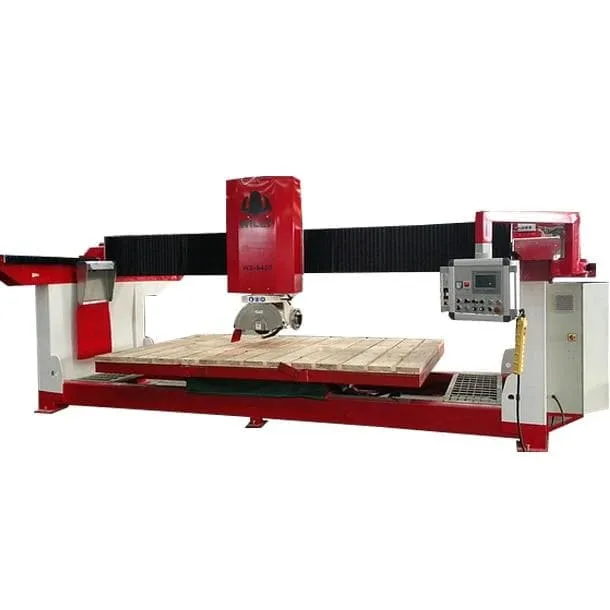
Programmable axes and multi-axis movement
The number of axes on a machine dictates its range of motion and speed. A basic 3-axis reliable granite bridge saw handles straight cuts using linear X, Y, and Z movements. Adding a fourth axis allows the blade to tilt, which is vital for precise miter work between 0 and 47 degrees. This automation helps you finish complex edges without moving the slab by hand. Systems with 5-axis movement offer the most speed because they can move in any direction to handle curved cuts and sink holes in one go.
Advanced software and camera systems
Smart software and camera layout tools take the guesswork out of slab nesting. An operator can take a photo of a slab and use software to place pieces in the best spots to avoid veins or cracks. This step reduces waste and speeds up the setup phase. Using wet-method controls during these automated cuts is also a key safety step. Research from the CDC shows that wet methods are needed to stop silica dust from harming workers. Automation makes it easier to keep these water systems running at the right levels.
Tool changes and operator workflow
Automatic tool changes help keep the machine running without stopping for a new blade or bit. Instead of a person pausing the work to swap tools, the machine does it in seconds. This keeps the workflow steady and prevents costly downtime. Experts note that unplanned machine breaks can cost a shop about $1,500 per hour. Investing in a professional grade bridge saw equipment with reliable automation helps you avoid these losses. These features ensure your shop hits its daily goals with less effort and more precision.
Plan for utilities, workflow, and support
Setting up a new bridge saw takes more than just clear floor space. You must plan for how stone slabs move through your shop and what the machine needs to run. A good layout keeps your workers safe and helps them get more done in less time. Shop owners must also think about the power and water lines that keep the saw in top shape.
Set up for shop safety and slab flow
A bridge saw takes up a large area, but you also need room around it. Leave enough space for forklifts or cranes to load big stone slabs onto the table. These safety zones help prevent mishaps when moving heavy loads. You should also think about how pieces move to the next step, like smoothing or sink cuts.
Clear paths for workers are just as important as space for the saw. If your shop is small, you might need gantry bridge saw systems that fit your exact floor plan. Make sure the slab moving gear does not block your power boxes or water valves.
A smart shop flow lets your team focus on top work rather than moving things in the way. Proper slab moving makes the whole day go faster. Having a clear plan for your floor space helps you avoid bottlenecks during busy times.
Match utilities to machine needs
Most bridge saws use a wet-cut method to keep the blade cool and stop dust. This is vital because stone dust can cause lung disease over time. A study by the CDC found that wet methods are the best way to control this risk.
You will need a steady water supply and a way to drain the waste. Shops that use wet methods for every step are much safer for their staff. This careful plan for water use is a key part of shop safety.
Your power and air needs will depend on the saw motor. Some machines use a 15 hp motor that needs a stable power feed. If the saw has air brakes or a tilting table, you will also need a compressed air line.
Check these specs before the saw arrives to avoid delays on the day you set it up. Having the right tools in place means you can start cutting right away. This work ensures your new gear runs at its best from day one.
Limit downtime with an upkeep plan
Unplanned downtime can cost a stone shop about $1,500 per hour. To avoid this, you need a clear plan for shop upkeep. Look for a reliable granite bridge saw with central grease points.
These easy-to-reach spots make it simple for your team to keep the machine running smooth. Train your staff to check the saw for wear at the start of every shift. They should look at the blade and check for leaks in the water lines.
Good training stops small issues from becoming big breaks. Check your diamond blades and water filters every day. Small tasks like cleaning the rails can stop big parts from breaking later.
You should also know where to get spare parts fast. Waiting weeks for a part from far away can hurt your profits. Good support from your tool dealer keeps you on track with your orders. A well-kept saw stays in use longer and makes more money for your shop.
How to choose the right bridge saw
Choosing the best machine for your shop depends on a few key things. You must look at your daily work load, the stone types you use, and your shop size. Most stone shops are small with fewer than ten workers on average. This means every tool must pay for itself through speed and ease of use. If you pick the wrong machine, you might face long waits for parts or high repair costs.Check your daily output
Your choice often starts with how much stone you need to cut each day. A manual bridge saw is a good pick for small shops on a budget. These tools need a skilled person to guide every cut. On average, a manual machine can cut about ten lineal feet of stone per hour. If your shop needs more speed, an automatic machine might be a better fit. Automated saws can reach speeds of 120 lineal feet per hour. This speed lets your team focus on quality checks and finishing work.Match the saw to your projects
The types of cuts you do most will guide you to a 3-axis, 4-axis, or 5-axis model. A 3-axis saw using professional grade bridge saw equipment handles straight cuts well. It moves in three ways to cut slabs or make sink holes. If your work has many miter joints, look for a 4-axis saw. These machines tilt the blade so you can make exact miter cuts without moving the slab. For very hard jobs, a 5-axis saw provides full blade tilt and swivel. This lets you handle hard shapes with ease.- Map out your daily work to see if you mostly cut straight lines or hard shapes.
- Count your daily slab count to see if you need the speed of an automated system.
- Check your floor space to ensure you can fit gantry bridge saw systems if needed.
- Review your power supply to see if it can handle the 15 hp motor found on many saws.
- Look at the blade size you need, as a 16-inch diamond blade can cut stone up to 3-3/4 inches thick.
- Compare the cost of the machine against the likely gain from faster output.
Focus on service and safety
Machine downtime is a big risk for any shop. Losing the use of your main saw can cost about 1,500 dollars for every hour it is down. For this reason, you should pick brands with strong tech support and easy access to parts. Upkeep is also key to a long machine life. Look for models with central grease points to make care simple. Safety is just as important as speed. Cutting stone creates silica dust, which can harm your lungs. Using wet-cutting methods is a vital way to control this dust. When you check manual bridge saw options or automated units, make sure they have good water systems. Good stone cutting and processing techniques help keep your shop safe and sound for years.Frequently Asked Questions
What is the difference between a bridge saw and a rail saw?
A bridge saw is a large, fixed tool where the stone sits on a table or the saw moves on a beam. It offers more power and speed for busy shops. A rail saw is a small tool that you place on top of the stone slab. While rail saws cost less, they cannot match the speed and depth of a full shop machine. According to trade guides, bridge saws are best for shops with steady work.
What saw is used to cut porcelain tile?
Most stone shops use bridge saws with diamond blades to cut porcelain tile. Since porcelain is very hard and dense, it needs a blade that can handle the heat. You must also use water to keep the blade cool and stop the tile from cracking. A bridge saw provides the strong base needed for the long, straight cuts used for large tile. Using the right feed rate helps ensure the edges stay clean without chipping the stone.
Does a bridge saw perform miter cuts?
Yes, many modern bridge saws can perform clean miter cuts by tilting the blade. A 4-axis or 5-axis machine can tilt the blade from 0 to 47 degrees. This lets you cut angles for edges without needing to move or tilt the heavy stone slab. According to Park Industries, these tools can produce smooth and clean miter cuts for custom kitchen tops. This part saves time and reduces the risk of breaking a slab.
What is a wire saw used for in stone shops?
A wire saw is a special machine used to cut very large stone blocks into square pieces or slabs. It uses a long metal wire coated with diamond beads to slice through the rock. While a bridge saw is used for slab breakdown, a wire saw is often the first tool used to prep raw stone. According to university reports, these machines allow for the finishing of plates and slabs for big building projects.
Ready to find the right stone tools for your shop?
Old machines can break down and cost you a lot of shop time. When your saws are slow, your team cannot finish as many stone jobs. This wait time hurts your bottom line and makes it hard to grow. Clean cuts the first time mean you have less waste and more profit. You can save time and keep your costs low when you have the right gear. Starting your search today puts you on the path to a shop that runs well. You will see the gains in your daily work as soon as you have the new tools in place. Do not let your old tools hold your shop back from making more money. Picking the right saw now will help you win more jobs and finish them fast.
Ready to compare your options? Browse bridge saws and CNC machines from Diamond Tool Store to find equipment matched to your shop workflow.