Ready to upgrade your jobsite? Browse the full skid steer attachments collection at Diamond Tool Store and find the exact tool your crew needs from over 150 top brands.
Skid steer attachments connect to your loader via a universal quick-attach plate. Standard hydraulic systems running 15 to 25 GPM power basic tools like buckets and grapples. While high-flow systems at 30 to 40 GPM are needed for heavy-duty tools like forestry mulchers. Always match attachment weight and flow requirements to your loader's rated operating capacity before buying.
What Types of Skid Steer Attachments Are Available by Application?
Skid steer attachments fall into four main categories: earthmoving tools like buckets and blades. Land clearing tools like grapples and brush cutters, digging implements like augers and trenchers, and specialty tools like hydraulic breakers and cold planers. Each group serves a distinct jobsite function and requires matching to your loader's hydraulic flow and lift capacity.
Earthmoving and leveling tools
Earthmoving is the most common job for a compact loader. Tools in this group shape, move, and grade soil to prep a site for construction. You can use standard skid steer buckets for digging and moving bulk materials, while box blades and dozer blades excel at fine grading. High-quality versions of these tools feature thick steel plates, reinforced welds, and tough cutting edges. Diamond Tool Store carries heavy-duty earth work tools built to withstand high force when pushing hard ground.
Land clearing and material handling
Clearing brush, trees, and heavy debris requires specialized attachments that can grip, cut, or grind. Operators use grapples, brush cutters, forestry mulchers, stump grinders, and tree shears to clear overgrown land. For lifting and stacking, pallet forks, bale spears, and log grapples turn your loader into a material handler. Premium clearing tools use high-strength steel, such as half-inch Grade 100 steel for grapple teeth, to prevent bending. Diamond Tool Store offers durable grapples, forks, and all the heavy-duty attachments you need for land clearing and material handling.
Digging and trenching implements
When you need to make deep holes or long, narrow channels, digging attachments save hours of manual labor. This category includes heavy augers for post holes, trenchers for utility lines, and backhoe arms for deep excavation. Augers excel at drilling clean vertical holes, while trenchers use specialized chains and teeth to cut through rocky soil. Quality trenchers often feature booms ranging from 36 to 60 inches long and dig trenches 6 to 8 inches wide. These tools need robust planetary drives to deliver the torque required for tough ground conditions.
Specialty and demolition attachments
Specialty tools adapt your loader for highly specific trade tasks, such as road repair, concrete work, or winter maintenance. This group includes concrete mixers, hydraulic breakers, cold planers, and snow removal tools like blowers and pushers. Blue Diamond, a key brand available through Diamond Tool Store, offers a wide range of these specialized tools including hydraulic breakers designed to smash through thick concrete. A quality specialty tool must have precise hydraulic plumbing and matching flow rates to ensure smooth operation without overheating the machine's hydraulic system.
What Earthmoving and Grading Attachments Do You Need for Your Jobsite?
Earthmoving attachments are the most commonly used skid steer tools. General purpose buckets handle digging and grading, dozer blades and box blades provide precise grade control. And land levelers create a smooth finish surface before concrete or sod installation. Each tool serves a specific stage in the site preparation sequence.
General purpose buckets
General purpose buckets are the most common tools for digging and moving dirt. You can choose a smooth bucket or a tooth bucket depending on your jobsite needs:
- Smooth buckets work best for clean grading, scraping, and backfilling loose soil.
- Tooth buckets use strong metal teeth to dig into hard, packed earth and clay.
- Long-bottom buckets provide better visibility and carry larger loads. A standard bucket has a 30-inch bottom, while a long-bottom model measures 36 inches.
Durability depends on the thickness of the steel. Standard buckets up to 72 inches wide use 3/16-inch thick material, while larger buckets of 78 inches or more use heavy-duty 1/4-inch steel. Every standard bucket uses a 3/4-inch by 6-inch cutting edge along the bottom front. Using these heavy steel plates ensures that your bucket does not bend or wear down during tough digging tasks.
Dozer blades and box blades
A 6-way dozer blade gives you full control over your grading work directly from the cab of your machine. These blades allow quick angle, tilt, and pitch adjustments so you can cut slopes and push dirt with ease. They work well for grading, backfilling trenches, and clearing snow. For road maintenance and gravel work, box blades combine strong ripping shanks with heavy steel blades. This design lets you break up hard soil and level it in a single pass. Hydraulic angle blades are also helpful for quick road upkeep and snow removal.
Land levelers for fine grading
Land levelers are ideal for fine grading and finishing work before you pour concrete or lay sod. These attachments ride flat on the ground to shave off high spots and fill in low areas. They create a smooth, flat surface with very little effort from the operator. For more info on concrete prep on your jobsite, read our skid steer concrete mixer guide to plan your equipment setup.
Site preparation sequence
A successful earthmoving project requires following a clear site preparation sequence to get the best results:
- Clear the area of all brush, rocks, and debris using grapples or clearing tools.
- Rip up hard-packed soil or rocky ground using adjustable ripper tines to loosen the dirt.
- Grade the loose soil with a box blade or land leveler to make the surface flat and smooth.
- Compact the graded soil to prevent settling and ensure a solid base for your construction project.
Need the right earthmoving gear? Shop skid steer buckets and grading attachments at Diamond Tool Store with fast nationwide delivery.
Land Clearing and Material Handling Attachments
Land clearing attachments like rippers, grapples, brush cutters, and forestry mulchers handle brush, stumps, and debris. Material handling tools such as pallet forks and log grapples let a single loader move heavy loads. Premium models use Grade 100 steel and require matching to your machine's hydraulic flow capacity.
Loosening ground with skid steer rippers
A skid steer ripper is the best tool for penetrating hard-packed clay, stony ground, or thick roots before you dig. These attachments come in five standard widths from 48 to 96 inches. The 60-inch model weighs 300 pounds, while the heavy 96-inch model weighs 519 pounds. Adjustable tines let you set the exact depth you need to rip. You can also add an optional finishing rake to clean up loose rocks and smooth out the soil after ripping. According to the United States Department of Agriculture, breaking up compacted soil layers is crucial for proper water flow and root growth on cleared land. A ripper attachment handles this job fast by loosening the ground before grading and planting.
Clearing debris with grapples and cutters
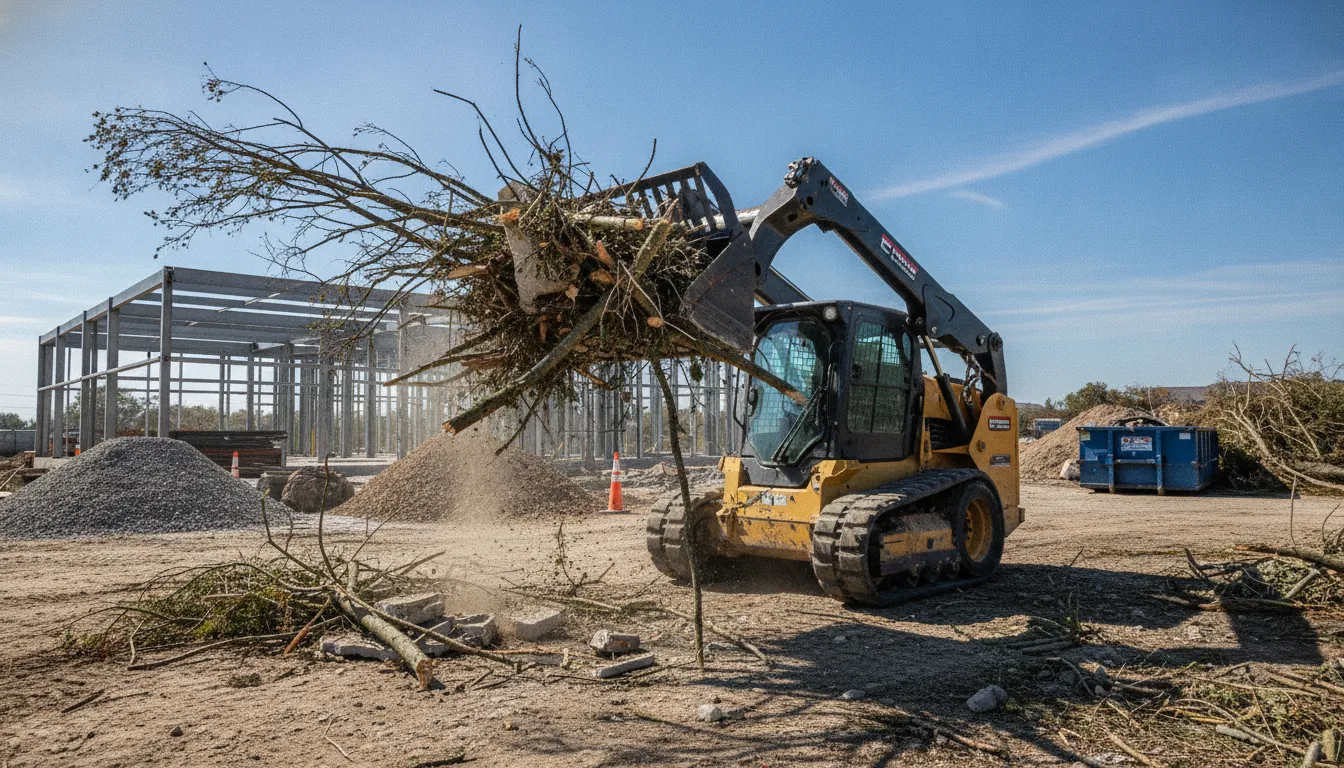
Root rakes and grapple buckets let you scoop up heavy piles of wood and rock while leaving the dirt behind. Here are the main types of clearing attachments:
- Claw-type grapples work well for logs and large debris.
- Lid-type grapples secure loose brush and mixed material.
- Root rakes with 1/2-inch Grade 100 steel open up to 48 inches wide.
- Brush cutters handle saplings up to 10 inches thick with 33 to 41 GPM high flow.
- Forestry mulchers and stump grinders clear land all the way down to the dirt.
If you want to compare different styles, read our guide to skid steer grapple buckets.
Moving materials with pallet forks
Once your site is clear, moving heavy materials like stone, block, or sod requires strong pallet forks. Diamond Tool Store offers 17 variations of Arrow pallet forks built specifically for skid steers, loaders, and telehandlers. These forks come in load capacities ranging from 3,500 to over 6,000 pounds. They mount easily to your machine using a standard, universal quick-attach plate. These high-strength plates are standard across most modern loader brands. Learn more about choosing the right fork length and frame width in our article on heavy duty skid steer pallet forks.
Why Does Hydraulic Flow Matter for Skid Steer Attachments?
Hydraulic flow, measured in gallons per minute (GPM), determines whether a skid steer attachment has enough power to operate. Standard flow systems (15 to 25 GPM) power grapples and augers, while high-flow systems (30 to 40 GPM) run heavy tools like brush cutters and mulchers. Using mismatched flow can damage your pump or stall the tool.
Standard flow versus high flow
Most compact loaders fall into two categories for hydraulic output:
- Standard-flow systems typically produce 15 to 25 GPM, which is perfect for common tasks like operating grapples and augers.
- High-flow systems deliver 30 to 40 or more GPM, which you need for heavy-duty tools like forestry mulchers and thick brush cutters.
According to data from the National Institute of Standards and Technology, matching hydraulic load to tool specifications is critical for safe fluid power system performance. You must check your machine's manual to find its specific GPM rating before buying any gear. Never try to run a high-flow tool on a standard-flow loader. It will not have enough power to do the job, and the tool will stall. Running a standard-flow tool on a high-flow loader can also cause serious harm by over-pressurizing the lines.
Universal quick-attach plate standards
The steel mounting plate on the front of your loader is just as vital as the fluid lines. Most modern machines use a universal quick-attach system. This design lets you swap tools in seconds without using heavy hand wrenches. It helps crews switch from a bucket to a set of forks and back with very little downtime.
This universal plate is standard across major brands like Bobcat, Caterpillar, John Deere, Case, and Kubota. Because of this common setup, you can buy brand-independent attachments with confidence. For smaller machines, you can browse mini skid steer attachments to find the correct plate fit. Always clean the locking pins on the plate each day. Dirt and mud can block the pins from locking, which can cause the tool to fall off during use.
Operating weight and lift capacity limits
Beyond fluid flow and plates, you must consider physical machine limits. Every loader has a rated operating capacity and a total operating weight. You must compare these two numbers against the weight of your new tool. If the attachment is too heavy, your loader can tip forward or lose traction in the rear.
Do not forget to add the weight of the material you plan to carry, like heavy dirt or wet gravel. For example, a heavy bucket filled with stone might exceed your machine's safe lifting limit. Checking these specs before you work keeps your job site safe. It also protects your loader's frame and tires from wearing out too fast.
What Skid Steer Attachments Do You Need for Your Jobsite?
To choose the right skid steer attachments, identify your most common tasks. Check your loader's hydraulic flow rate (standard or high flow), and verify that each tool's weight stays within your machine's rated operating capacity. Diamond Tool Store carries attachments from over 150 brands with express delivery nationwide.
Match your job and hydraulic flow
Every jobsite task has its own demands. Dirt work and grading need heavy steel tools, while clearing brush or lifting pallets needs specialized grips. Look at the flow rate of your skid steer before choosing. Standard flow systems usually provide 15 to 25 gallons per minute, which is plenty for simple tools like buckets and pallet forks. High flow systems run at 30 to 40 gallons per minute, which you need for heavy tools like brush cutters or stump grinders. Working with mismatched flow can damage your machine pump or stall the tool.
You must also check the lifting capacity of your machine. Make sure the weight of the tool plus the load does not exceed your operating capacity. Since 1994, Diamond Tool Store has been a trusted distributor helping buyers find the right setup. We offer over 150 industry brands with express delivery to get your jobsite running fast.
Compare your attachment options
To help you choose, here is a breakdown of four common categories. Use this comparison table to match your needs to the right tool type, build style, and flow rate.
| Attachment Category | Best Use Case | Hydraulic Requirement | Material Construction | Price Range |
|---|---|---|---|---|
| Buckets | Digging, grading, and moving loose soil | Standard Flow (15-25 GPM) | 3/16-inch to 1/4-inch steel | $800 - $2,500 |
| Grapples | Sifting dirt and picking up debris | Standard Flow (15-25 GPM) | Grade 100 steel teeth | $2,500 - $5,500 |
| Pallet Forks | Lifting and moving palletized materials | Standard Flow (No auxiliary flow needed) | Heavy duty forged steel tines | $700 - $1,800 |
| Rippers | Penetrating and loosening hard ground | Standard Flow (No auxiliary flow needed) | Reinforced steel with adjustable tines | $1,200 - $3,200 |
Choose a bucket for general earthmoving, grading, or backfilling loose dirt. A general purpose bucket with a long bottom gives you better visibility from the cab. Grapples are the best choice when you need to lift scrap, logs, or rocks while leaving loose dirt behind. For material handling in warehouses or yards, pallet forks let you lift heavy loads with capacities from 3,500 to over 6,000 pounds. Rippers are ideal for breaking up hard, packed soil or clay before you grade or plant.
Maintain your tools for long life
Your job does not end when you buy your tool. Good maintenance keeps your gear safe and prevents downtime on the job. Follow these steps to keep your attachments in top condition:
- Inspect your tools for wear before and after every use. Look for cracks in the steel, loose tines, or worn cutting edges.
- Clean away dirt, mud, and debris after a long day of work to prevent rust.
- Lubricate all moving parts on a regular schedule.
- Check hydraulic connections and hoses for leaks or damage. Even minor leaks can cause a drop in pressure.
- Protect couplers from dust to prevent internal wear on your loader and tools.
A simple habit of greasing pivot points and inspecting hoses before each shift prevents costly breakdowns and extends the life of both your attachment and your loader.
Ready to find the right tools for your jobsite? Browse skid steer attachments at Diamond Tool Store for fast shipping on over 150 top brands.
Frequently Asked Questions
Which attachment is the most versatile for a skid steer?
The general purpose bucket is the most versatile skid steer attachment. It handles digging, grading, carrying, and backfilling in a single tool. Available in smooth edge, tooth, and long-bottom configurations, a quality bucket from brands like Blue Diamond lets operators tackle most earthmoving tasks without switching attachments. Buckets up to 72 inches use 3/16-inch steel while larger models use 1/4-inch steel for heavier loads.
Can standard flow skid steers run a hydraulic brush cutter?
Yes, standard flow skid steers can run many hydraulic brush cutters. Most standard flow systems run between 15 and 25 gallons per minute, which provides enough power for standard clearing tools. However. Heavy-duty brush cutters and forestry mulchers with high power needs often require high-flow hydraulics of 30 to 40 gallons per minute to operate safely and get the job done.
Are all skid steer attachment plates the same?
Most modern skid steers use a universal quick-attach plate system. This standard setup lets you swap tools quickly and works across almost all major loader brands including Bobcat, Caterpillar, Deere, Case, and Kubota. While the physical hookup is universal, you must still check that your loader has the hydraulic flow rate. Weight capacity, and lift limits to handle the specific attachment before you try to use it.
How deep can a skid steer trencher attachment dig?
A standard skid steer trencher attachment typically features a boom that ranges from 36 to 60 inches in length. This allows the tool to dig trenches up to five feet deep while cutting a path about six to eight inches wide. The exact depth you can reach depends on the length of the boom and the type of teeth you use for your specific soil conditions.
What is the difference between a grapple rake and a root grapple?
A grapple rake uses tines spaced closely together to sift through loose material and collect smaller debris while letting dirt fall through. A root grapple, also called a claw grapple, has thicker, wider-spaced tines designed to grab large objects like stumps, boulders, and logs. Both are excellent for land clearing, but the right choice depends on whether you are cleaning up fine debris or handling large, heavy material.
Ready to Find the Best Skid Steer Attachment for Your Job?
Using the wrong tool on your skid steer costs you time and money on every job. Delaying your purchase means slower project times and extra wear on your machine. Getting the right attachment now helps your crew finish jobs faster, reduces hand labor, and protects your heavy equipment from wear.
Browse the full skid steer attachments collection at Diamond Tool Store to get the exact tool your crew needs for your next project. Fast shipping on over 150 top brands.