


A clean core starts before the bit touches the slab. The crew must match the bit and rig to the hole size and material, secure the setup, and plan cooling and slurry control before drilling begins. Those decisions affect accuracy, cutting speed, segment life, and the condition of the finished opening.
Concrete core drilling uses a hollow, cylindrical diamond-tipped bit to remove a solid cylinder from concrete or masonry. In typical construction work, the rig is anchored to the surface and water is used to cool the bit, lubricate the cut, and carry debris away. The method produces precise round holes for utilities, anchors, inspections, and other site work. It can also provide an accurate, undisturbed sample when material analysis is required.
From handheld tools to stand-mounted rigs, the right setup depends on access, diameter, depth, and the demands of the substrate. Start by identifying how core drilling works and where contractors use it, then build the equipment and operating plan around that application.
Shop diamond core bits and coring rigs at Diamond Tool Store to match the right bit and setup to your next penetration.
What Is Concrete Core Drilling and When Do Contractors Use It?
Concrete core drilling uses a hollow, cylindrical diamond bit to cut through concrete or masonry and remove a solid cylinder of material, called a core. Unlike a conventional twist drill that produces loose chips, the core barrel creates a clean, round opening while retaining the cut sample. That combination makes the method useful when the hole must match a specified diameter or when the removed material needs to be examined.
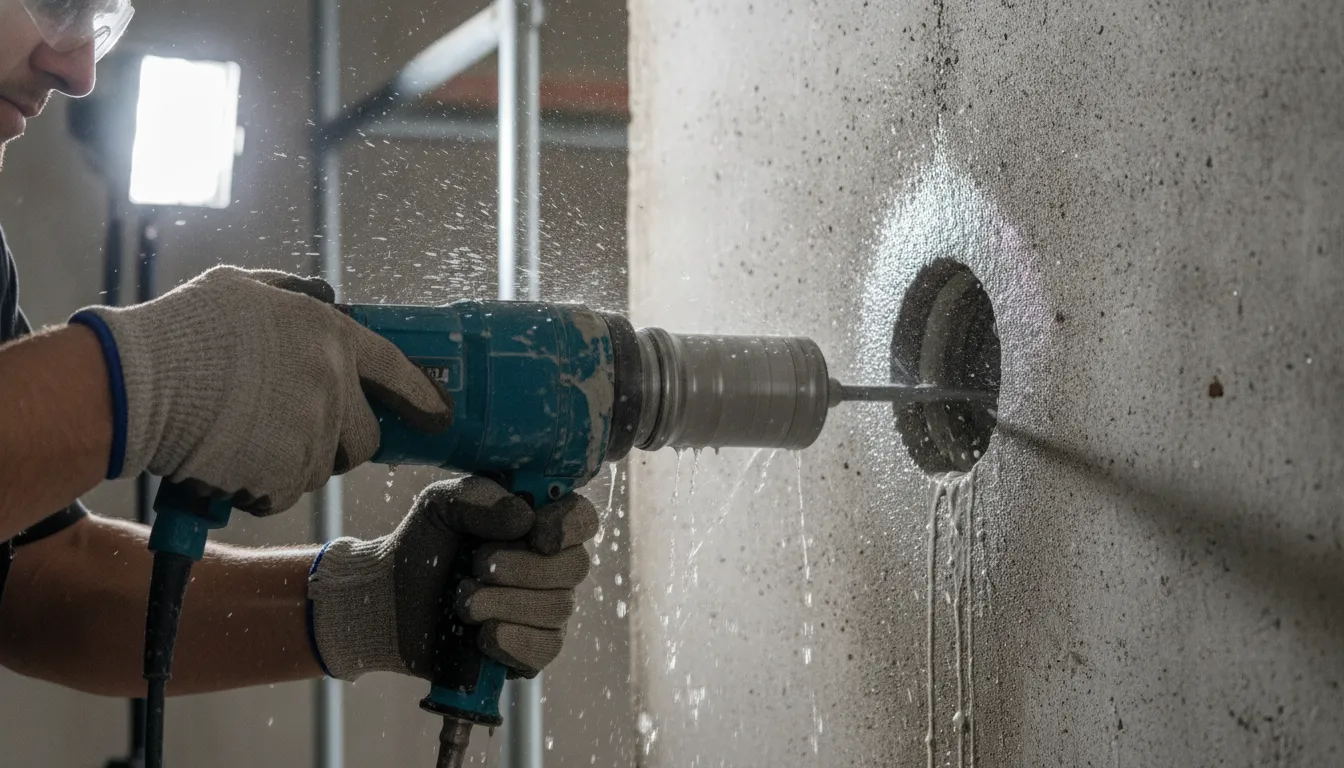
On a typical construction job, the core drill rig is anchored to the surface so the bit tracks steadily through the material. Diamond segments do the cutting, while water is commonly used to cool and lubricate the bit and carry debris out of the cut. The exact setup depends on the hole diameter, drilling depth, concrete condition, access, and whether the crew can manage water at the work area. The basic process is summarized by SafetyCulture's core drilling overview.
Creating openings for utilities and anchors
Contractors use core drilling when plumbing, electrical, mechanical, or fire-protection systems must pass through an existing slab, wall, deck, or foundation. A round opening gives installers a predictable path for conduit, pipe, sleeves, and other penetrations. Core drilling is also useful for setting anchors and installing posts, railings, equipment, or other fixtures where a controlled hole is required. Before cutting, crews should confirm the layout and check for embedded utilities, reinforcing steel, and post-tensioning components.
Taking samples and inspecting existing concrete
When the material itself is the subject of the work, the extracted core can provide a more representative sample than loose debris from surface removal. Core drilling is used in construction and geotechnical exploration because it can produce accurate, relatively undisturbed material samples for laboratory analysis. Samples may help teams evaluate concrete quality, investigate suspected damage, or document conditions before repair. The testing laboratory or engineer should specify the required diameter, depth, orientation, and handling method before drilling.
Hole quality depends on more than choosing a bit with the right diameter. Segment design, bond, and the material being cut all affect how the tool performs. For a closer look at how diamond core bit segment types relate to cutting applications, review the segment guide before selecting tooling. Matching the bit, rig, anchoring method, and cooling approach helps contractors produce a clean penetration without unnecessary vibration, wandering, or premature tool wear.
Choosing the Right Concrete Core Drilling Bits and Rigs
Bit and rig selection should follow the hole, the material, and the conditions at the work area. A small penetration for an anchor or conduit does not need the same setup as a deep sleeve opening or a large service penetration. Start by defining the required diameter, depth, access, and available power before choosing the equipment.
Handheld vs Stand-Mounted Rigs
Handheld core drills are useful for smaller diameters, short holes, and locations where a stand cannot be positioned. They are faster to set up, but the operator must control alignment, feed pressure, and torque. For repeatable holes, larger diameters, or deeper cuts, a stand-mounted rig is usually the better choice. The column guides the motor and bit, helping maintain a straight bore while reducing operator fatigue.
Secure the stand before drilling. Depending on the surface and jobsite requirements, that may mean a vacuum base, anchor bolts, or another approved anchoring method. Vacuum bases can speed setup on suitable, reasonably smooth concrete. Anchor bolts provide a dependable mechanical connection when the surface, dust, moisture, or drilling forces make vacuum mounting unsuitable.
Matching Bit Diameter and Depth to the Job
Core bit sizes commonly cover roughly 1 inch through 25.6 inches, although the usable range depends on the motor, stand, material, and manufacturer rating. Handheld systems are generally suited to smaller holes, often up to about 3 or 4 inches. Stand-mounted systems cover larger diameters, with some heavy-duty combinations rated for holes beyond 20 inches.
Choose the barrel length and extension system for the required depth, not simply the hole diameter. A long hole may need staged drilling, extensions, reliable water delivery, and a plan for removing the core. Keep the rig and bit within their rated capacity. Pushing a light motor or undersized stand into a large, deep cut can slow production, increase vibration, and damage the tooling.
Choose the Motor Source and Bit Construction
Corded motors suit sites with dependable electrical service. Battery-powered systems help crews work where cords are inconvenient, while hydraulic motors are useful for remote, wet, or specialized work areas when a compatible power pack is available. Confirm input requirements and duty cycle before mobilizing.
The bit crown carries the diamond segments that do the cutting. Segment height, bond, and diamond concentration affect how the bit behaves in different concrete and aggregate conditions. For a closer look at crown and segment choices, review the diamond core bit segment guide. When the application is defined, compare compatible diamond core bits by diameter, connection, depth, and material rating rather than price alone.
Wet vs Dry Core Drilling: Cooling Methods That Protect Bits and Concrete
Water is more than a cleanup aid during concrete core drilling. It cools the diamond segments, lubricates the cut, and carries abrasive debris out of the kerf. In the typical construction setup, the rig is anchored to the surface and the diamond core bit runs with water cooling for lubrication and debris removal. Learn more about wet vs dry diamond core bits when choosing a method for a specific jobsite.
Why wet drilling is the standard for concrete
For through-holes and deeper cuts in concrete or masonry, wet drilling is usually the safer choice for the tool and the material. Maintain a steady, controlled water flow rather than flooding the work area. The stream should be sufficient to keep the cut cool and move slurry away from the bit without washing out the work zone or obscuring your layout.
Water flow that is too low allows heat and abrasive dust to build at the segments. Flow that is too high can create unnecessary slurry and make it harder to see the cut. Use a catchment or slurry-control plan, protect nearby electrical equipment, and confirm that runoff will not create a slip hazard.
When dry drilling makes sense
Dry drilling can be useful for shallow, top-down holes where introducing water is impractical. It requires effective dust extraction and a bit designed for dry use. Keep the feed controlled and avoid forcing the bit through hard aggregate. Dry cutting removes less heat from the segment, so the operator has less margin for excessive pressure, long uninterrupted passes, or a poorly matched bit.
| Factor | Wet drilling | Dry drilling |
|---|---|---|
| Cut cooling | Water carries heat away from the segments continuously. | No liquid coolant. Heat removal depends on feed and air flow. |
| Dust control | Slurry collects dust. Needs catchment and cleanup. | Requires vacuum or dust extraction at the bit. |
| Best for | Through-holes, deep cuts, and most concrete and masonry. | Shallow, top-down holes where water is impractical. |
| Risk | Slurry can obscure layout and create slip hazards. | Overheating can accelerate diamond segment wear. |
Stop and inspect the bit if cutting slows, the motor labors, the segment color changes from heat, or the tool begins to smell hot. A bit that is binding, producing unusually fine dust, or losing cutting speed may be overheating rather than simply encountering a harder spot. Let the bit cool according to the tool manufacturer's guidance, then check alignment, water delivery or extraction, and feed pressure before continuing. If heat returns quickly, switch to wet drilling when the site allows it, or use a bit and operating method better suited to dry work.
Watch segment wear, not just cutting speed
Overheating accelerates diamond wear and can shorten useful bit life. Segment wear can be tracked through changes in the cutting diameter and loss of tool weight over time, which are recognized indicators of diamond cutting wear. See the documented wear criteria in the concrete diamond cutting study. Inspect the bit after the cut and replace it when the segments, barrel, or connections no longer support a stable, accurate operation.
Best Practices and Safety for Clean, Accurate Core Drilling Holes
Pre-Drill Checklist
Start with a stable setup. Anchor the rig with a vacuum base when the surface and equipment allow it, or use anchor bolts for a mechanically secured installation. Confirm that the base cannot shift before the bit contacts the concrete. Mark the hole center clearly, verify the diameter and required depth, and check the planned path for embedded rebar, conduit, and other obstructions. Rebar can slow the cut, load the segments, and change the feed feel, so do not force the bit through unexpected resistance.
Inspect the rig, spindle, barrel, bit, hoses, and fittings before drilling. Match the barrel and bit to the job, secure every connection, and never use a damaged or visibly worn bit. Review the operating procedure with everyone in the work area, then select PPE for the cutting method. At minimum, use eye protection, hearing protection, gloves, and a suitable dust mask or respirator. For more guidance, review this concrete dust management and safety equipment resource.
During the Cut
Begin at low speed with a controlled pilot or collar cut. Keep the rig aligned with the mark and let the bit establish a shallow groove before increasing speed. Apply steady feed pressure, but do not force the tool. Excessive pressure can stall the motor, deflect the rig, overheat the segments, or produce an inaccurate hole. A consistent feed gives the diamonds time to cut rather than rub.
For wet concrete core drilling, maintain a reliable water flow throughout the cut. Water helps lubricate the interface and carry debris away from the hole. Watch the slurry, sound, vibration, and motor load. If the bit binds, the water stops, or the rig shifts, stop and correct the condition before continuing. Keep hands, loose clothing, and cords clear of rotating components, and manage slurry so the operator does not lose footing.
After the Cut
Stop the spindle completely before removing the core, changing a connection, or clearing debris. Support the core and use the proper removal method so it does not drop unexpectedly. Shut down and isolate the equipment before cleaning. Rinse slurry from suitable components, inspect the bit and connections for damage, and check the rig for loosened hardware. Regular maintenance, including cleaning, lubrication where specified, and inspection of wear points, keeps the next hole predictable and reduces avoidable downtime.
Step-by-Step Concrete Core Drilling Techniques for Concrete and Masonry
A clean core starts before the motor turns. Plan the hole, stabilize the rig, and control water, feed pressure, and depth throughout the cut. The same workflow works for concrete and masonry, but brick and block usually cut faster because their matrix is softer and more abrasive.
- Mark the hole and check the drilling zone. Confirm the diameter, depth, and exit point. Scan for electrical lines, plumbing, post-tensioning, and embedded steel before setting the rig. Do not assume an unmarked area is clear. If the scan or project drawings indicate reinforcement or utilities, stop and resolve the conflict before drilling.
- Set up and anchor the rig. Position the stand square to the surface and align the center of the bit with the mark. Secure the base with the approved anchor or vacuum system, then check that the anchor is fully seated and the rig cannot shift. A misaligned or loose anchor produces wandering holes, vibration, and uneven segment wear.
- Install the correct bit and connect water. Match the diamond core bit to the material, hole diameter, and required depth. Inspect the barrel, segments, threads, and connections before installation. Connect a reliable water supply and verify flow at the bit. Water lubricates the cut, carries slurry away, and helps control heat in wet drilling.
- Make a pilot or collar cut at low speed. Start slowly with light pressure while the bit establishes a shallow collar. Keep the rig square and avoid rocking the barrel. Once the bit tracks cleanly, increase speed only as the material and equipment allow. Brick and block may cut quickly, but check hollow block carefully so the bit does not break through into an unsupported cavity.
- Drill with a steady, even feed. Apply consistent pressure instead of forcing the bit. Let the diamond segments do the cutting. Excessive force can stall the motor, bind the barrel, or damage segments. If the rig begins to vibrate, slow down and correct alignment rather than pushing harder.
- Monitor depth and clear slurry. Watch the depth indicator and water return. Periodically ease the bit back while it is still rotating to flush slurry from the kerf and barrel, especially in deep holes. Construction coring rigs can use extensions or nested barrels for substantial depths, but every added section must be properly connected and supported. Never drill blindly through rebar; stop and reassess when resistance changes sharply.
- Remove the core and clean the hole. Stop water and power according to the equipment procedure, then remove the core with the proper tool. Check the hole for chips, loose material, and remaining slurry. Flush or vacuum the opening, inspect the finished diameter and depth, and clean the work area before releasing the rig.
The most common avoidable errors are forcing a dull or binding bit. Running without adequate water, anchoring out of alignment, and treating reinforcement as if it were ordinary concrete. Correct those conditions early and the cut will be straighter, cooler, and easier to finish.
Frequently Asked Questions
Can you core drill through reinforced concrete and masonry?
Yes. A properly matched diamond core bit can cut clean, round openings through concrete, reinforced concrete, and many masonry materials. Select the bit for the material and diameter, secure the rig, and account for embedded rebar, conduits, and other obstructions before drilling. For utility penetrations, anchors, and inspection work, the hollow bit also removes a solid cylindrical core instead of pulverizing the entire opening.
How deep can you core drill concrete?
There is no single depth limit for every setup. Maximum depth depends on the rig, barrel length, bit diameter, motor capacity, and available extensions. For a deep hole, confirm that the rig can remain rigid as the barrel advances and plan how the core will be broken up or removed. The tool manufacturer's rated drilling depth is the correct starting point for equipment selection.
What is the process of concrete core drilling?
Mark the hole, scan or inspect the area for hazards, and anchor the drill rig securely. Fit a diamond-tipped core bit, establish water flow when using a wet setup, and begin with controlled pressure so the bit tracks accurately. Maintain steady feed and cooling through the cut, then remove the core, flush or vacuum the opening, and inspect the finished hole. This process uses water for lubrication and debris removal when wet drilling is specified (source).
How much does concrete core drilling cost?
Pricing varies by hole diameter, drilling depth, concrete thickness, rebar, quantity, access, and whether water management or specialized anchoring is required. A clear scope should identify the material, hole size, depth, angle, location, and site restrictions before comparing equipment or service estimates. For tool selection, review the available diamond drilling tools against those job requirements rather than choosing by diameter alone.
Ready to Choose Your Core Drilling Tooling?
The right bit and setup can help your crew produce cleaner, more accurate holes while matching the demands of the material and jobsite. Review available options by application, diameter, and tooling requirements before your next cut. Browse diamond core bits and coring tooling at Diamond Tool Store, or contact the team if you need help narrowing the selection.